ON THE METRO
With dark
detectable sounds
puffing on the red line
on West Street
with snow falling
in a leaky roof
on the subway
losing the map
and address
for my gig,
I take out
my pawned sax
from an old
motel suitcase
from another country
and play slowly
in perpetual motion
on the metro
to earn
a few dollars
before midnight
between train doors
as a would be
Anna Kerenina
steps up to take
her life
after hearing
my cadenza
and moves away.
SURVIVAL BOXES
The threshold
of the homeless
in survival boxes
chattering faces
outside the windows
on frozen fields
at the edge of town
dawn chills
sleepers on flagstone
by a row
of the overpowered.
IN THE BREAKDOWN LANE
Traffic in a row
of road rage
in the darkness
of a moldy mirror
at midnight
near a strip club
the star performer
remakes
her lips redder
as a heart beat
stops dead
by a hunky hitchhiker
on the train tracks
with his valuables
on one long leg
and arm
with a record
of forced entry
desperation
as she lets
him in the front
and he drives
her crazy
for food
as he opens
his basket
and devours.
Bionote
B.Z. Niditch is a poet, playwright, fiction writer and teacher. His
work is widely published in journals and magazines throughout the
world, including: Columbia: A Magazine of Poetry and Art; The
Literary Review; Denver Quarterly; Hawaii Review; Le
Guepard (France); Kadmos (France); Prism International; Jejune (Czech
Republic); Leopold Bloom (Budapest); Antioch Review; and Prairie
Schooner, among others. He lives in Brookline, Massachusetts.
Monday, 28 January 2013

3 Poems by Tracy Lynn Repchuk
Random Control
Inspired rituals from earthly connections
as hands create, nurture and plant
Joyous celebrations in every occasion
through the spiritual healing of colour.
Random delights enhance and entrance
as life’s story is told
on tiles as varied as mankind
Each able to move and shift to change
the outcome on any given day.
So it becomes a matter of choice -
whether it be dark or bright,
coloured, grey, fluorescent,
with the excitement of the future
under your control
Like a strategic game of chess
you move your piece
into the best position
Not to overcome –
but to oversee.
Resolutions
I knew it was time
For me to look hard at what I had done
Or not done
At what I wanted to do
But did not do
At the carnage that lay in my wake
Of broken dreams that would have to once again
Be picked up, and scraped off the poured concrete
and confronted.
Unfulfilled, unconscious barriers
Silently seep through
and comfortably take their place
while I continuously walked face first
into the brick wall that is my life.
It doesn’t happen in one day
That - I would have noticed
It is the tiny, insidious little events
Once accumulated to become
The Mount Everest of reality
for such paltry desires.
And as each occurrence strangles
Hope screams
My floral bloom shrinks to the prickly
State of cactus
Living off of shards of water
Surrounded by breathless air
But still -
It is a new year, and I will take this
minimalistic opportunity to cast
my shredded net into the ocean
of this game I chose to play
and pray that I once again do not
get caught on life’s discards
so that I may catch my whale.
Serenade of the cicadas
Black-eyed blossoms invisibly
intoxicate from distant woodlands
where emerald streams of healthy crops cascade
along turquoise horizons;
and hints
of sun-kissed buttercups invite me to dance.
From a long hibernation I emerge
as buds press against rigid soil
I swing lazily carving breezes while whispering
winds promise spring;
under the
covered porch that hugs the house majestically.
Baked peaches torment from sweet sills
and my senses salivate
anticipating this evening’s delights;
among
drones suckling nectar from receptive chambers.
A wind-chapped smile erupts
to rejoice my favorite season
as lapping waves of sunshine nourish;
and
clinking cubes marry tart lemons.
Draping trees fill with the operatic melodies
resonating organs
debut to a command performance;
where
friction and limb triumph.
Heated cardinals and brown speckled jockos
meditate
inhaling the heavenly view
I drift outwards;
licking
colorful clouds and bands of jade over parched fields.
Handfuls of divine light
gift-wrap my spirit
until temporal sounds transcend me back;
to the
symphonic serenade of the cicadas.
Bionote
Tracy Lynn Repchuk (born 1965) is a Canadian writer and poet. Repchuk is the president and founder of the Canadian Federation of Poets and Editor of Poetry Canada Magazine. Repchuk lives in Burbank, California.
Tracy Lynn Repchuk (born 1965) is a Canadian writer and poet. Repchuk is the president and founder of the Canadian Federation of Poets and Editor of Poetry Canada Magazine. Repchuk lives in Burbank, California.
2 Poems by Wanda Morrow Clevenger
every word
it is in the span
of uncensored
long together
long drive home
from lobster and
tall mango drink
meals
that fixes mete
of every word
I ever wanted
to say
outside bird
if time physically stood
still then is at 6:50 AM
in the hum of electric fan
stir of heady bud;
bed covers world buoyant
with dim dawn with
a bird outside trilling
Bionote
Wanda Morrow Clevenger is the author of This Same Small Town in Each of Us (Edgar & Lenore's Publishing House; 2011). Her published work of 181 pieces appear in 66 print and electronic publications. A collection of poetry is tentatively scheduled for release in late 2013 or early 2014. For access to her blog It's All Just Telling Tales Out of School, visit: http://wlc-wlcblog.blogspot.com/
Monday, 21 January 2013
3 Prose Poems by Adele Kenny
When Everything You’ve Done and Everything That’s
Happened to You Is Not What Your Life Is
She’s not sure how her life happened or why—the evidence is
contradictory (unwise choices, the illnesses, grief). A goldfinch
sings in the pine, its wing a fragile shadow cast through lingering
light—the shape of silence.
There are things she keeps from herself—the nightmare she dreamt
and re-dreamt until, finally, it meant nothing. The bullet passed
through the leaf—the leaf didn’t fall.
The stone circle in her yard and the little house are solid in their
places—ringed with water and birds. The sapling she planted is firm
in the earth. Her puppy sleeps beside her, tail curled under his
small body (the other dogs’ ghosts always close). What else did she
want? Things she hoped for already begun—this is all good. Good.
And enough.
Even Now
(For My Father)
Memory is easy here, in springtime’s rimless light—and only a
little rain to pattern the sky. There’s a faint (perhaps
remembered) scent of wild violet. Something sweet that stays. Shadows
tumble through clouds. It’s been more than thirty years—your
death a grief that only now begins to know its name. All this time,
I’ve rebuilt you out of dead leaves and wind, dumb with a feeling
that even now, I can’t express—as if that dark were your
happiness and you ran to it, years too young to be dead; as if, even
now, you might open your hand and reach through time to where I wait.
Of
Other
It isn’t now or this patch of blue autumn, light skimmed like milk
without substance (its ghost on my lips). Or the way trees darken
before the sky, the way light slants through pines (my neighbor’s
lamp or the moon). It’s not the way night feels when I walk in
March, when snow melts into mud, and I smell grass again; when I
know, without seeing, that tight buds open high in the branches.
It’s not the expected order of things but moments of other (when
something startles you into knowing something other), and the
heaviness lifts inside you.
Tonight, wind pulled leaves from the sky to my feet and, suddenly
(without warning) a deer leapt from the thicket behind me—leapt and
disappeared—past me as I passed myself, my body filled with
absence, with air, a perfect mold of the light gone through it.
Bionote
Adele Kenny is the author of twenty-three books (poetry & nonfiction). Her poems, reviews, and articles have been published worldwide, and her poems have appeared in books and anthologies published by Crown, Tuttle, Shambhala, and McGraw-Hill. She is the recipient of various awards, including two poetry fellowships from the NJ State Arts Council, a Merton Poetry of the Sacred Award, and the 2012 International Book Award for Poetry. A former creative writing professor in the College of New Rochelle’s Graduate School, she is founding director of the Carriage House Poetry Series and poetry editor of Tiferet Journal. Active in readings and in private and agency-sponsored workshops, she has read in the US, England, Ireland, and France, and has twice been a featured reader at the Geraldine R. Dodge Poetry Festival. Website: www.Adelekenny.com/ The Music In It Poetry Blog: http://adelekenny.blogspot.com/
2 Poems by Felino A. Soriano
facilitation
of open
hands
flex in the sleeping aggregations of achromatic
devotion
hands enter gauge of spectral warmth then
deliver
as do smiles’ proprietary
devotion to
Of road in the neighboring silence
restructured celluloid
enables
prose of paused enigmas…
either of the each rendition of throat/spectral speech
(as does the terminal approach
to
confiding mathematics: inward into self’s composite
interaction2) spoken
contamination is the years’ prior
focus:
alone this
silent pathway
this
diameter of temporal thrust, of
the questioning immanent relay, again
the subjective cannot commune
among second trusting travelling
therefore reconfiguring
analogies enter
road of sacred road:
desire among echoes and
intertwined
reactions
[Author's note: These poems are from my ongoing collection
entitled Of these voices.]
Bionote
Felino A. Soriano has authored nearly five dozen collections of poetry, including the collaborative volume with poet, Heller Levinson and visual artist, Linda Lynch, Hinge Trio (La Alameda Press, 2012) rhythm:s (Fowlpox Press, 2012), and Quartet Dialogues (white sky ebooks, 2012). He publishes the online endeavors Counterexample Poetics and Differentia Press. His work finds foundation in philosophical studies and connection to various idioms of jazz music. He lives in California with his wife and family and is the director of supported living and independent living programs providing supports to adults with developmental disabilities. For further information, please visit www.felinoasoriano.info.
Bionote
Felino A. Soriano has authored nearly five dozen collections of poetry, including the collaborative volume with poet, Heller Levinson and visual artist, Linda Lynch, Hinge Trio (La Alameda Press, 2012) rhythm:s (Fowlpox Press, 2012), and Quartet Dialogues (white sky ebooks, 2012). He publishes the online endeavors Counterexample Poetics and Differentia Press. His work finds foundation in philosophical studies and connection to various idioms of jazz music. He lives in California with his wife and family and is the director of supported living and independent living programs providing supports to adults with developmental disabilities. For further information, please visit www.felinoasoriano.info.
1 Poem by Art Heifetz
Night Wanderers
Like a sailboat striving
To catch the wind,
I shift from side to side.
Each time I get up and return
You
awaken too
As if in loving you
Our two lives have become
Synchronized.
You tuck the paisley comforter
Beneath my chin
And take my hand in yours
As if I were a frightened child
Seeking reassurance
From his mother’s warmth.
When I slept at Mike and Gert’s
apartment,
I listened to their comings and
goings
Until I learned to recognize
Their endless ablutions
And medical complaints.
Light on, light off,
They paraded through the night.
Now I too have joined the ranks
Of the night wanderers
It happened all too suddenly
The evening I looked into the
mirror
And found my father’s tired eyes
Staring back at me
With such serious intent
I had to catch my breath
Bionote
Art
Heifetz teaches ESL to refugees in Richmond, Va. He has
published 50 poems in 5 countries since June. He is an
ex-Peace Corps volunteer and retired
State Farm agent. Life begins at 66.
3 Photos by Joneve McCormick


Bionote
Photographer: Joneve McCormick, Isla Vista, California. Joneve is a poet, writer, editor, translator and photographer.
1 Photo by Liu Yu
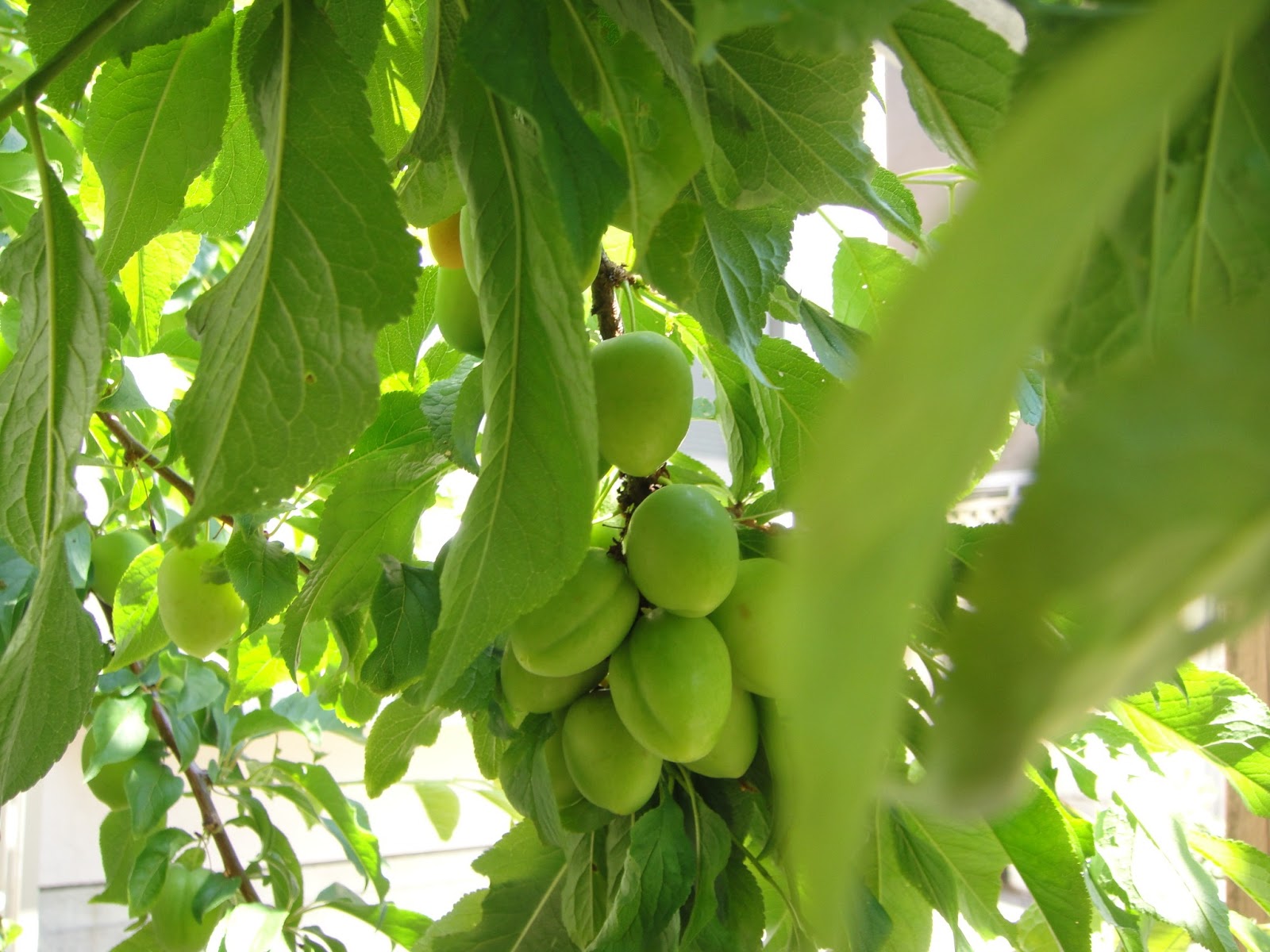 |
| Waiting: Two Vague Leaves vs A Whole Clear Season |
Bionote
Liu Yu, a native of Gong-an, Hubei Province, used to work as an administrator at Jingzhou Poeple's Bank of China before retirement. Now she enjoys playing huapai, taking pictures and cooking for her family. Publication credits include Hubei Daily and Collection of Biographical Sketches of Advanced Financial Workers (Hong Kong).
Monday, 14 January 2013
3 Poems by Laurence Overmire
Autumnal
the clap of trees
withering in the dusk
the sad dropping of emaciate leaf
secrets whispered in a desolate wind
we cannot understand
nor touch the sorrow
the tramping of feet
the crush of sticks in dust
life’s travails mocked
in timelessness of starlight
the unheard voice
lost in a moment of breath.
Crisis
What seemed so great
in the moment
was
in the scheme of things
very small
Only death and its
incumbent couriers
merit the attention
of so strict a life’s
expectancy
And then, and only then
in the calm eye of the storm
can one see
clearly
that which was forbidden
was only a temporary latch
on that pearly gate of
Knowing.
Earthtones
There are times in a life
When words fail
Like rain to a gutter
Waste away
The crying of clouds
Thunderously exhausted
Gray pillows no comfort
The head too hard to find
Solace
In the repellant crust of
Stone.
Bionote
Laurence Overmire is the author of the recently released The One Idea That Saves The World: A Call to Conscience and A Call to Action. He has had a multi-faceted career as poet, author, actor, director, educator, and genealogist. His award-winning poetry has been widely published in hundreds of journals, magazines and anthologies worldwide. Overmire is an advocate for peace, justice, human and animal rights, and the environment. www.laurenceovermire.com
Bionote
Laurence Overmire is the author of the recently released The One Idea That Saves The World: A Call to Conscience and A Call to Action. He has had a multi-faceted career as poet, author, actor, director, educator, and genealogist. His award-winning poetry has been widely published in hundreds of journals, magazines and anthologies worldwide. Overmire is an advocate for peace, justice, human and animal rights, and the environment. www.laurenceovermire.com
3 Poems by Fide ERKEN
Flower Language
flowers have miraculous colours
they send us love with their perfumes;
a different language have flowers
even if i learn all the languages in the
world
it won't be possible for me to tell about love
as well as fragrant flowers
it won't be possible for me to tell about love
as well as fragrant flowers
i smell love watching their colours
and want to say "i love you"
in the flower-language to my lover
and want to say "i love you"
in the flower-language to my lover
In a Daisy Field
I'm rolling in a poetry field, Where so many daisies abound, A soft breeze bringing their mist. I'm smelling them, Satisfied with watching their White, yellow appearance, So I don't need to write a poem.
Then your name is echoed
Amongst the petals, Spreading this wonderful sound All around the waving daisies.
It's enough to hear
The most beautiful name I've ever known. We smile to each other, Me and the daisies. Walls |
The World of complex ideas,
different faiths,
little tolerance,
mostly, lack of complaisance
Look at the flowers with every colour,
full of love, together
flowers have easily climbed over
all the walls!
full of love, together
flowers have easily climbed over
all the walls!
Bionote
Fide ERKEN was born in Bursa, in 1967. She spent the first seven years of
her childhood in Trilye, a pretty village of Mudanya. Then she came to
Bursa with her family. She finished primary, secondary and high schools
in Bursa. After high school she attended the department of Industrial
Engineering in Middle East Technical University. After finishing the
prep and first classes there she left that school and entered the
department of English in Uludag University. She was graduated from
this school in the year 1991. She's still been working as an English
teacher in Bursa. Fide Erken says that poetry is in people's nature
and that she first was tempted by this emotional current in primary
school. She stepped the beginning leading her to further points in
poetry by having two awards in poetry competitions when she was in high
school. Some of her poems were first published in Öner art magazine
and in a local newspaper
journal. She's been taken attention with her English poems for some
years. Her poems have been published in some internet sites and
magazines. The fluency in her poems she writes integrating love of
people and nature determinates her place in the poetry world. Fide Erken is married and has two daughters.
3 Haiku by Arunansu Banerjee
haiku
1.
eyes of crow
a
rickshaw-puller
by the road
2.
rose
in the
breeze…
waiting for
you
3.
how many
spring nights
would you
remain this distant
winter’s
moon
Bionote
Born and brought up in Kolkata, Arunansu writes poems out of passion.
Has been contributing to online journals as The Peregrine Muse, Here
and Now, etc. More of Arunansu’s poems can be read at
http://www.arunansub.blogspot.in/ A keen photographer, he likes
enthusing poetic images with visuals. His photographic blog is
http://www.arunansu-myphotos.blogspot.in/
Sunday, 6 January 2013
1 Poem by R. S. Deese
Road Runner
Heaven or the promised land
Eternity or soon
Once I spy the vanishing point
I'm out of this cartoon
Beep beep
Bionote
R.S. Deese grew up in Claremont, California. After earning his bachelor’s degree in history from UC Berkeley, he traveled to East Asia, where he taught English Composition at Nanjing University in China. He first came to Boston University to study poetry and then returned to earn his PhD in history in 2007. He currently teaches 20th Century World History in BU's College of General Studies. His work has also been published in Agni, The Berkeley Poetry Review, Endeavour, MungBeing, New Times Los Angeles, and The Quarterly.
3 Poems by Joan McNerney
SeaScape I
Hearing waves from a distance and
feeling sea breezes brush our faces,
it seemed a century before we
came to the ocean.
feeling sea breezes brush our faces,
it seemed a century before we
came to the ocean.
So blue and bright to our eyes
its rhythm broke chains of
unremarkable days.
its rhythm broke chains of
unremarkable days.
Over cool sand we ran and you picked
three perfect shells which fit
inside each other. Swimming away in
that moving expanse below kiss
of fine spray and splashes.
three perfect shells which fit
inside each other. Swimming away in
that moving expanse below kiss
of fine spray and splashes.
With clouds cumulus we drifted while
gulls circled the island. Together we
discovered beds of morning glories
climbing soft dunes
gulls circled the island. Together we
discovered beds of morning glories
climbing soft dunes
SeaScape II
Let's dive in ocean hiss swish
riding with bluewhales, bluewaves.
Brush of foam and windy ripples
sunbeams chasing quicksilver fish.
riding with bluewhales, bluewaves.
Brush of foam and windy ripples
sunbeams chasing quicksilver fish.
Floating through our shining world
fragrant clouds, feathery clouds.
We weave one arm after another
wearing bracelets of salt pearl.
SeaScape III
My mind is an ocean
where swimmers, surfers,
sun worshippers cavort.
where swimmers, surfers,
sun worshippers cavort.
Long salty hair
held between
their teeth.
Flourishing
wild flowered gowns
…streams of silk
waves of taffeta
splashy lace.
held between
their teeth.
Flourishing
wild flowered gowns
…streams of silk
waves of taffeta
splashy lace.
They sail through
my watery face
combing my eyes
whispering in my ears.
my watery face
combing my eyes
whispering in my ears.
Alone, under a pointillist sky.
Gulls flying around me.
Black waters touched by
moon of vague prophecy.
Gulls flying around me.
Black waters touched by
moon of vague prophecy.
Bionote
Joan McNerney’s poetry has been included in numerous
literary magazines such as Seven Circle Press, Dinner
with the Muse, Camel Saloon Books on Blog,
Blueline, Vine Leaves, Spectrum, and three
Bright Spring Press Anthologies. She has been
nominated three times for Best of the Net. Four of
her books have been published by fine literary presses.
She has recited her work at the National Arts Club, New
York City, State University of New York, Oneonta, McNay
Art Institute, San Antonio and other distinguished venues.
A recent reading was sponsored by the American Academy of
Poetry. Her latest title is Having Lunch with the
Sky, A.P.D. Press, Albany, New York.
Tuesday, 1 January 2013
3 Poems by John M. Bennett
Sinking Mirror
,seeping ,closing ,clawing
,caving ,runting ,nodding
,negging ,aiming ,roiling
,flaming ,towelling ,gagging
,ising ,gaming ,noming
,torquing ,clouding ,yetting
,iffing ,blaming ,cleaning
,stinking ,claiming ,latheing
,loaning ,dogging ,mocking
,marking all the ladders
all the lathered mouths
all the ticking necks
tumbling in the faucet stream
bound to glory
bl
dic e
k own
lob stor
enfogic
....sur.............................. . . .
olvido
the ssorted sshadow chimess a
cor nur mured where my lap
ssed th ought’ss a crissc
raw ))meaty foot mile(( ah
dang led russt ling in the d
rain my ssee med t haw
a ss pelt leaf de lettered
ssp ring deletreadoss loss g
ritoss in son deadoss la ssom
bra del ssissmo ]]ful
minante[[ “sslept beneath the
dusst” the towerr ssplit the
tongue lathered toward the f
inal para graph )sseeping
ssailing ,sstinging greasse(
was the wind a fork ?
Bionote
John M. Bennett has published over 400 books and chapbooks of poetry and other materials. Among the most recent are rOlling COMBers (Potes & Poets Press), MAILER LEAVES HAM (Pantograph Press), LOOSE WATCH (Invisible Press), CHAC PROSTIBULARIO (with Ivan Arguelles; Pavement Saw Press), HISTORIETAS ALFABETICAS (Luna Bisonte Prods), PUBLIC CUBE (Luna Bisonte Prods), THE PEEL (Anabasis Press), GLUE (xPress(ed)), LAP GUN CUT (with F. A. Nettelbeck; Luna Bisonte Prods), INSTRUCTION BOOK (Luna Bisonte Prods), la M al (Blue Lion Books), CANTAR DEL HUFF (Luna Bisonte Prods), SOUND DIRT (with Jim Leftwich; Luna Bisonte Prods), BACKWORDS (Blue Lion Books), NOS (Redfox Press), D RAIN B LOOM (with Scott Helmes; xPress(ed)), CHANGDENTS (Offerta Speciale), L ENTES (Blue Lion Books), NOS (Redfoxpress), SPITTING DDREAMS (Blue Lion Books), ONDA (with Tom Cassidy; Luna Bisonte Prods), 30 DIALOGOS SONOROS (with Martín Gubbins; Luna Bisonte Prods), BANGING THE STONE (WITH Jim Leftwich; Luna Bisonte Prods), FASTER NIH (Luna Bisonte Prods); RREVES (Editions du Silence); NEOLIPIC (Argotist); LAS CABEZAS MAYAS/MAYA HEADS (Luna Bisonte Prods); BALAM MALAB (Logan Elm Press); LA VISTA GANCHA (Luna Bisonte Prods); THE SOCK SACK/UNFINISHED FICTIONS/MORE INSERTS (with Richard Kostelanetz; Luna Bisonte Prods); T ICK TICK TIC K (Chalked Editions and White Sky Books); THIS IS VISUAL POETRY (This is Visual Poetry); EL HUMO LETRADO: POESÍA EN ESPAÑOL (Chalk Editions; 2nd ed. White Sky Books); ZABOD (Tonerworks); TEXTIS GLOBBOLALICUS (3 vols.; mOnocle-Lash Anti-Press); NITLATOA (Luna Bisonte Prods); OHIO GRIMES AND MISTED MEANIES (with Ben Bennett, Bob Marsh, Jack Wright; Edgetone Records); SUMO MI TOSIS (White Sky Books); CORRESPONDENCE 1979-1983 (with Davi Det Hompson; Luna Bisonte Prods); THE GNAT’S WINDOW (Luna Bisonte Prods); DRILLING FOR SUIT MYSTERY (with Matthew T. Stolte; Luna Bisonte Prods); OBJECT OBJET (with Nicolas Carras; Luna Bisonte Prods); CARAARAC & EL TÍTULO INVISIBLE (Luna Bisonte Prods); LIBER X (Luna Bisonte Prods; CUITLACOCHTLI (Xexoxial Editions); and BLOCK (Luna Bisonte Prods). He has published, exhibited and performed his word art worldwide in thousands of publications and venues. He was editor and publisher of LOST AND FOUND TIMES (1975-2005), and is Curator of the Avant Writing Collection at The Ohio State University Libraries. Richard Kostelanetz has called him “the seminal American poet of my generation”. His work, publications, and papers are collected in several major institutions, including Washington University (St. Louis), SUNY Buffalo, The Ohio State University, The Museum of Modern Art, and other major libraries. His PhD (UCLA 1970) is in Latin American Literature.
Poetry Pacific Chatroom: Topic 1: Is Poetry really dying?
Introduction
As poetry practitioners, we certainly have many concerns about this pseudo profession. Legitimate or otherwise, these concerns of ours must, we believe, be shared by many poetry enthusiasts, including literary theoreticians, teachers, students and readers as well as poetry writers/editors/publishers, although with varying degrees. To address these concerns, we begin to introduce one poetic topic for online discussions on the first day of each month, hoping to generate some readerly interest and even critical attention. While we welcome everyone to drop by our chat room to make a casual comment, throw in an email, or write a serious essay, we will publish any written response that we think might be informative, inspiring or intriguing to our reading public. Even if there is no verbal feedback at all, we will nevertheless feel delighted if the topic can make someone stop for a moment to ponder over it. (Editors of Poetry Pacific)
The Observation
One of the greatest poetic paradoxes we are facing today is this: while people are still as ready as before to express themselves verbally in certain poetic way, they have become extremely reluctant to read poetry, let alone pay to do so while there are various other free forms of entertainment available to them. On the one hand, there are writers willing to contribute thousands of hours and/or dollars to the publication of their poetry books, or pay dozens, even hundreds of dollars, just to get their single poems published by a vanity press; on the other, there are poems as good as, if not better than, any masterpieces by a major figure in literary history or a Nobel prize winner, which few would pay a few bucks to buy or download the publication where such poems appear. Indeed, we are living in a world where there seem to be far more poetry manufacturers than poetry consumers. With more poetry writers than poems, more poetry books or journals than readers, and more poetry publishers than editors, poetry has become a true gift-economy. Ironically, free as these gifts are from the very hearts of poetry writers, they find few eager receivers, nor are they often duly appreciated, even if many of them may have cost whole lifetimes.
The Question
Is Poetry really dying like our Hero, or already dead like Nietzsche's God?
you comments on or responses to this topic are welcome in the box below or at yuans@shaw.ca!
As poetry practitioners, we certainly have many concerns about this pseudo profession. Legitimate or otherwise, these concerns of ours must, we believe, be shared by many poetry enthusiasts, including literary theoreticians, teachers, students and readers as well as poetry writers/editors/publishers, although with varying degrees. To address these concerns, we begin to introduce one poetic topic for online discussions on the first day of each month, hoping to generate some readerly interest and even critical attention. While we welcome everyone to drop by our chat room to make a casual comment, throw in an email, or write a serious essay, we will publish any written response that we think might be informative, inspiring or intriguing to our reading public. Even if there is no verbal feedback at all, we will nevertheless feel delighted if the topic can make someone stop for a moment to ponder over it. (Editors of Poetry Pacific)
The Observation
One of the greatest poetic paradoxes we are facing today is this: while people are still as ready as before to express themselves verbally in certain poetic way, they have become extremely reluctant to read poetry, let alone pay to do so while there are various other free forms of entertainment available to them. On the one hand, there are writers willing to contribute thousands of hours and/or dollars to the publication of their poetry books, or pay dozens, even hundreds of dollars, just to get their single poems published by a vanity press; on the other, there are poems as good as, if not better than, any masterpieces by a major figure in literary history or a Nobel prize winner, which few would pay a few bucks to buy or download the publication where such poems appear. Indeed, we are living in a world where there seem to be far more poetry manufacturers than poetry consumers. With more poetry writers than poems, more poetry books or journals than readers, and more poetry publishers than editors, poetry has become a true gift-economy. Ironically, free as these gifts are from the very hearts of poetry writers, they find few eager receivers, nor are they often duly appreciated, even if many of them may have cost whole lifetimes.
The Question
Is Poetry really dying like our Hero, or already dead like Nietzsche's God?
you comments on or responses to this topic are welcome in the box below or at yuans@shaw.ca!
Call for Submissions: Why, Or Why Not Poetry Pacific?
Among thousands of online and print publications of literature/poetry already available to writers and readers,
why, just why Poetry Pacific??
Well, succinctly put, Poetry Pacific is unique in two most significant ways:::
I. Poetry Pacific offers the most possible freedom and convenience to you as a poetry submitter::
You can submit any number of poems of any kind, any time of the year in any manner you like: previously unpublished or otherwise (insofar as you still hold the copy/publishing right); single or multiple, individually targeted or simultaneous, online or via snailmail, although we may prefer considering 3 shorter pieces at a time pasted in the body of an email. It would be kind of you to mention PP as a writing credit, but please do not feel obliged to do so, nor will we bother you with any other requests.
II. Poetry Pacific tries to give you the most and longest possible literary exposure and reputation::
Your work will enjoy human longevity. Although PP has an extremely humble start, it is to expand into a serious publishing enterprise. At very least, it is a 2-generation program, which will naturally last much longer than hundreds, and even thousands, of other literary outlets. As time goes by, PP will introduce more special features to attract readerly attention. PP believes that its editorial emphasis on word's worth rather than on Wordsworth will eventually win the wind.
That being so, then just why, why not Poetry Pacific?
For more, please see PP's Submission Guidelines on the right side.
your poetic work is always more than welcome at yuans@shaw.ca!!
Well, succinctly put, Poetry Pacific is unique in two most significant ways:::
I. Poetry Pacific offers the most possible freedom and convenience to you as a poetry submitter::
You can submit any number of poems of any kind, any time of the year in any manner you like: previously unpublished or otherwise (insofar as you still hold the copy/publishing right); single or multiple, individually targeted or simultaneous, online or via snailmail, although we may prefer considering 3 shorter pieces at a time pasted in the body of an email. It would be kind of you to mention PP as a writing credit, but please do not feel obliged to do so, nor will we bother you with any other requests.
II. Poetry Pacific tries to give you the most and longest possible literary exposure and reputation::
Your work will enjoy human longevity. Although PP has an extremely humble start, it is to expand into a serious publishing enterprise. At very least, it is a 2-generation program, which will naturally last much longer than hundreds, and even thousands, of other literary outlets. As time goes by, PP will introduce more special features to attract readerly attention. PP believes that its editorial emphasis on word's worth rather than on Wordsworth will eventually win the wind.
That being so, then just why, why not Poetry Pacific?
For more, please see PP's Submission Guidelines on the right side.
your poetic work is always more than welcome at yuans@shaw.ca!!
Monday, 24 December 2012
3 Poems by Alan Botsford
a mamaist journey
The word I heard
Hurt.
The word I said
Fed.
The word I felt
Dealt.
The word I saw
Was law.
The word I remembered
Lifted as a bird.
The word I sang
Gave wings.
The word I loved
Stood neither below nor above.
The word I entered
Tempered me
And took me everywhere
The sound of the temple bell went.
deep
Nobody wants to go down
There. The pearl
Mirage all but
Faded from view.
Fathoms of an ocean muddied
With oil slicks, garbage, and soap
Detergent churning suds ashore
On waves of desire,
Tides of longing, as breath conspires to be held
Long enough for the blood
To go coursing, palpable pressure
In the veins felt, until…
Oxygen surges back into your moon-split lungs.
I Shot the Poet
Shot him in the foot
Now he can’t walk
Shot him in the chin
Now he can’t talk
Shot him in the groin
Now he can’t take
The ladies for a spin
Shot him in the shoulder
Now he can’t carry
The world around any longer
Shot him in the eye
Now he wears a patch
Shot him in the back
Now he’s slow to trust
Or become too attached
Shot him in the heart
Look at his dust
All got up and never,
No, never out-classed.
Bionote
Alan Botsford is the author of mamaist: learning a new language (Minato No Hito, 2002), A Book of Shadows (Katydid Press, 2003), and Walt Whitman of Cosmic Folklore (Sage Hill Press, 2010), a hybrid of prose, dialogues and poetry. His work has appeared in several anthologies and in many print and online journals such as American Writing: A Magazine, BlazeVox, Confrontation Magazine, Cortland Review, Ekleksographia, Mickle Street Review, River Styx, and Yemassee Literary Journal, among others. He lives in Japan where he is a professor of American Literature at Kanto Gakuin University and serves as editor of Poetry Kanto, Japan’s longest-running bilingual poetry magazine. His website is: http://mamaist.com/
The word I heard
Hurt.
The word I said
Fed.
The word I felt
Dealt.
The word I saw
Was law.
The word I remembered
Lifted as a bird.
The word I sang
Gave wings.
The word I loved
Stood neither below nor above.
The word I entered
Tempered me
And took me everywhere
The sound of the temple bell went.
deep
Nobody wants to go down
There. The pearl
Mirage all but
Faded from view.
Fathoms of an ocean muddied
With oil slicks, garbage, and soap
Detergent churning suds ashore
On waves of desire,
Tides of longing, as breath conspires to be held
Long enough for the blood
To go coursing, palpable pressure
In the veins felt, until…
Oxygen surges back into your moon-split lungs.
I Shot the Poet
Shot him in the foot
Now he can’t walk
Shot him in the chin
Now he can’t talk
Shot him in the groin
Now he can’t take
The ladies for a spin
Shot him in the shoulder
Now he can’t carry
The world around any longer
Shot him in the eye
Now he wears a patch
Shot him in the back
Now he’s slow to trust
Or become too attached
Shot him in the heart
Look at his dust
All got up and never,
No, never out-classed.
Bionote
Alan Botsford is the author of mamaist: learning a new language (Minato No Hito, 2002), A Book of Shadows (Katydid Press, 2003), and Walt Whitman of Cosmic Folklore (Sage Hill Press, 2010), a hybrid of prose, dialogues and poetry. His work has appeared in several anthologies and in many print and online journals such as American Writing: A Magazine, BlazeVox, Confrontation Magazine, Cortland Review, Ekleksographia, Mickle Street Review, River Styx, and Yemassee Literary Journal, among others. He lives in Japan where he is a professor of American Literature at Kanto Gakuin University and serves as editor of Poetry Kanto, Japan’s longest-running bilingual poetry magazine. His website is: http://mamaist.com/
Monday, 17 December 2012
3 Poems by Kevin Immanuel
Medical Marijuana Industry Is Unnerved by U.S. Crackdown UKIAH,
Calif. — An intensifying federal crackdown on growers and sellers of
state-authorized
medical marijuana
Tethered and said
Semi make up
jump for
Prototype skies
It seemed like it could
Be her
T-Mobile and AT&T Edge Closer to Scrapping MergerWASHINGTON — AT&T and T-Mobile USA edged closer to scrapping their proposed merger
Usual modes
Just ask apply prescient
Dominance vaults op
Laugh along the red flag
Slumber not rainfall
Dance straight very
summer
Under new
Management
Sarkozy and Merkel Push for Changes to Europe TreatyPARIS — Under the pressure of financial crisis and with the euro currency at stake
It’s a trap
It’s a trap
It’s a
Nice ice celebrity cell
Her piercing eyes
Were typically
Sublimely anger
And love
Total drug slugs
Bionote
Kevin Immanuel has studied art at five universities in Canada, Europe, and the United States. Published in seven poetry journals, including The Text (UK), Grain (Canada), The Filling Station (Canada), Ditch (Canada) and The Graphic Tales of Mr. Todd and Associates (Canada), Immanuel explores experimental poetry.
[Editor's note: In the above-featured experimental poems, the titles are, according to the author, taken from the New York Times, Global News articles.]
Tethered and said
Semi make up
jump for
Prototype skies
It seemed like it could
Be her
T-Mobile and AT&T Edge Closer to Scrapping MergerWASHINGTON — AT&T and T-Mobile USA edged closer to scrapping their proposed merger
Usual modes
Just ask apply prescient
Dominance vaults op
Laugh along the red flag
Slumber not rainfall
Dance straight very
summer
Under new
Management
Sarkozy and Merkel Push for Changes to Europe TreatyPARIS — Under the pressure of financial crisis and with the euro currency at stake
It’s a trap
It’s a trap
It’s a
Nice ice celebrity cell
Her piercing eyes
Were typically
Sublimely anger
And love
Total drug slugs
Bionote
Kevin Immanuel has studied art at five universities in Canada, Europe, and the United States. Published in seven poetry journals, including The Text (UK), Grain (Canada), The Filling Station (Canada), Ditch (Canada) and The Graphic Tales of Mr. Todd and Associates (Canada), Immanuel explores experimental poetry.
[Editor's note: In the above-featured experimental poems, the titles are, according to the author, taken from the New York Times, Global News articles.]
Monday, 10 December 2012
1 Poem by Paul Sohar
Non-Euclidean Geometry Lesson
Rectangular is the god
of those who hate one another;
his blunt weight first flattens them,
and then his sharp corners crumple them
into schizoid patterns of
puzzle pieces clinging together
in an funeral monument.
The god of those who love
one another shines in a circular form
like a big bubble until it starts
rolling over picture frames
and doors and becomes
a spinning blade sawing off
unphotographed nights.
The god of the indifferent
appears in a point of infinitesimal
dimension piercing the wall of silence
letting invisible light shoot
through like sand driven
by a desert storm;
eyes can smart and drizzle
even in total darkness.
Bionote
Paul Sohar ended his higher education with a BA in philosophy and took a day job in a research lab while writing in every genre, publishing seven books of translations. His own poetry (Homing Poems) is available from Iniquity Press. Latest book: Wayward Orchard (Wordrunner Press: www.echapbook.com/poems/sohar 2011). Lyricist to G-D is Something Gorgeous a musical produced in Scranton, PA (2007). Winner in 2012 Lincoln Poets Contest. His magazine credits: Agni, Gargoyle, Kenyon Review, Rattle, Seneca Review, etc.
Rectangular is the god
of those who hate one another;
his blunt weight first flattens them,
and then his sharp corners crumple them
into schizoid patterns of
puzzle pieces clinging together
in an funeral monument.
The god of those who love
one another shines in a circular form
like a big bubble until it starts
rolling over picture frames
and doors and becomes
a spinning blade sawing off
unphotographed nights.
The god of the indifferent
appears in a point of infinitesimal
dimension piercing the wall of silence
letting invisible light shoot
through like sand driven
by a desert storm;
eyes can smart and drizzle
even in total darkness.
Bionote
Paul Sohar ended his higher education with a BA in philosophy and took a day job in a research lab while writing in every genre, publishing seven books of translations. His own poetry (Homing Poems) is available from Iniquity Press. Latest book: Wayward Orchard (Wordrunner Press: www.echapbook.com/poems/sohar 2011). Lyricist to G-D is Something Gorgeous a musical produced in Scranton, PA (2007). Winner in 2012 Lincoln Poets Contest. His magazine credits: Agni, Gargoyle, Kenyon Review, Rattle, Seneca Review, etc.
Friday, 7 December 2012
Solicited Poems by Mark Smith-Soto
Lost and Found
The way objects wait, how their patience shames
us! The loved comb lodged behind the console, years
yawn, presidencies tumble, irreplaceable dogs die
one after another after another, and still, still
behind the console, the same straight smile greeting
the dust of yet another winter, grooming each
disheveled morning with gentle teeth, the same
teeth that drew dark parallels, perfectly spaced
rivulets, the length of her long hair back when
she wore it long and pecan brown—why did
we have to find you when we already mourned
you? Ah, there you are! she cries, as if the years
meant nothing now, and all she had to do was
blow it clean and draw it through her hair.
Cocoon
Where is the beginning of this
thread I’ve found wound into my hair
on waking? All morning pulling at it,
gently, gently, wanting not to break
the story of it, tugging at a meaning
that would not mean completely, even
as noontime beamed with explanations.
Now evening relaxes at the core, and I
find I have unspun half of myself
into my hands, the thread a web, my
mind gone to gauze in a strange light.
Where is the end of this unspinning?
What is this freshness in the air?
What are these wings?
Night Watch
Chico whines, no reason why. Just now walked,
dinner gobbled, head and ears well scratched.
And yet he whines, looking up at me as if confused
at my just sitting here, typing away, while darkness
is stalking the back yard. How can I be so blind,
he wants to know, how sad, how tragic, how I
won’t listen before it is too late. His whines are
refugees from a brain where time and loss have
small dominion, but where the tyranny of now
is absolute. I get up and throw open the kitchen door
and he disappears down the cement steps, barking
deeper and darker than I remember. I follow
to find him perfectly still in the empty yard—
the two of us in the twilight, standing guard.
[published in Poetry East]
Bionote
Mark Smith-Soto is Professor of Spanish and editor of International Poetry Review at the University of North Carolina at Greensboro. He has published three prize-winning chapbooks and two full-length poetry collections to date, Our Lives Are Rivers (University Press of Florida, 2003), and Any Second Now (Main Street Rag Publishing Co., 2006). His poetry, which was recognized with an NEA creative writing fellowship in 2005 and has been nominated three times for a Pushcart Prize, has appeared in Antioch Review, Kenyon Review, Literary Review, Nimrod, The Sun and many other publications. In 2010, Unicorn Press brought out his work of translation Fever Season, the selected poetry of Costa Rican writer Ana Istarú. His most recent works are Berkeley Prelude: A Lyrical Memoir (Unicorn Press, 2012) and the chapbook Splices, due out next year from Finishing Line Press.
The way objects wait, how their patience shames
us! The loved comb lodged behind the console, years
yawn, presidencies tumble, irreplaceable dogs die
one after another after another, and still, still
behind the console, the same straight smile greeting
the dust of yet another winter, grooming each
disheveled morning with gentle teeth, the same
teeth that drew dark parallels, perfectly spaced
rivulets, the length of her long hair back when
she wore it long and pecan brown—why did
we have to find you when we already mourned
you? Ah, there you are! she cries, as if the years
meant nothing now, and all she had to do was
blow it clean and draw it through her hair.
Cocoon
Where is the beginning of this
thread I’ve found wound into my hair
on waking? All morning pulling at it,
gently, gently, wanting not to break
the story of it, tugging at a meaning
that would not mean completely, even
as noontime beamed with explanations.
Now evening relaxes at the core, and I
find I have unspun half of myself
into my hands, the thread a web, my
mind gone to gauze in a strange light.
Where is the end of this unspinning?
What is this freshness in the air?
What are these wings?
Night Watch
Chico whines, no reason why. Just now walked,
dinner gobbled, head and ears well scratched.
And yet he whines, looking up at me as if confused
at my just sitting here, typing away, while darkness
is stalking the back yard. How can I be so blind,
he wants to know, how sad, how tragic, how I
won’t listen before it is too late. His whines are
refugees from a brain where time and loss have
small dominion, but where the tyranny of now
is absolute. I get up and throw open the kitchen door
and he disappears down the cement steps, barking
deeper and darker than I remember. I follow
to find him perfectly still in the empty yard—
the two of us in the twilight, standing guard.
[published in Poetry East]
Bionote
Mark Smith-Soto is Professor of Spanish and editor of International Poetry Review at the University of North Carolina at Greensboro. He has published three prize-winning chapbooks and two full-length poetry collections to date, Our Lives Are Rivers (University Press of Florida, 2003), and Any Second Now (Main Street Rag Publishing Co., 2006). His poetry, which was recognized with an NEA creative writing fellowship in 2005 and has been nominated three times for a Pushcart Prize, has appeared in Antioch Review, Kenyon Review, Literary Review, Nimrod, The Sun and many other publications. In 2010, Unicorn Press brought out his work of translation Fever Season, the selected poetry of Costa Rican writer Ana Istarú. His most recent works are Berkeley Prelude: A Lyrical Memoir (Unicorn Press, 2012) and the chapbook Splices, due out next year from Finishing Line Press.
Thursday, 6 December 2012
1 Poem by Lisa Aldridge
Dyslexia
Bionote
Lisa Aldridge is a writer who miraculously tears herself away from writing long enough to teach her sociology students. She has had poems published by the University of Arkansas Press and the online literary journal, Lunch at Giverny. She received the Samuel C. Dellinger Award for academic writing. She also presented her research and writing “Pregnant Women Can’t Make Pickles” at the Scholar’s Symposium at the University of Central Missouri.
Monday, 3 December 2012
2 Poems by Denny E. Marshall
Night Songs
Her lips were like silk sheets
Wrapped loosely around my mind
Aboard a magic carpet
With our hearts intertwined
Super Nova
Stars drop from the sky
Like raindrops
With all the storms in my life
That can surround me
I am still blessed
With your warmth
I find myself sprinkled
In your light
Bionote
Denny E. Marshall has done art and poetry for years, but just started writing fiction and articles in 2011. Recent credits include cover art for Unspoken Water 3 (The music issue) and Dreams & Nightmares 93, interior art for Night To Dawn 22 among others. His first article titled “Rejection Is A Good thing, Stop Whining” is online at Eclectic Eel on the All About Art page. More of Denny’s previously published works can be seen at www.dennymarshall.com.
Monthly Call for Submissions
* All kinds of poetry in terms of style and subject matter are equally welcome, though we tend to love shorter pieces more;
* All poems are carefully considered year round and, upon acceptance, will be eagerly posted;
* No author information except names and email addresses in your submissions please - we will ask you for a professional third person bionote upon acceptance;
* Multiple and simultaneous submissions are encouraged;
* Previously published work is always okay with us insofar as you still hold the copy or publishing rights;
* From time to time, we solicit poems from established as well as emerging poets;
* Neither money exchange nor publishing right is involved, except a genuine love for words, and perhaps for artfully articulated wisdom;
* Please paste up to 3 poems in the body of your email text and send them over to yuans@shaw.ca;
* Our response time is shorter than 2 weeks after the receipt;
* Only those accepted will get a reply - Gooooooodluuuuuuuck!
Friday, 30 November 2012
1 Poem by Melyssa G. Sprott
Not the Mirror
It’s not the mirror glass that’s cold,
it’s my reflection—I’ve been told.
So comes the fall, the frigid shiver
of my soul, such tiny slivers.
Little shards of time forgot—
instant reminders that all is lost.
It’s not the mirror glass that’s chilled—
it’s my frozen soul, empty and killed.
Tiny fragments of calm unretained,
all this loss—inside contained.
Such minute slivers—this fractured soul,
so comes the shiver—uncontrolled.
It’s not the mirrors shiny sheen,
it is myself—I have seen.
Bionote
Melyssa G. Sprott is dark and disturbing and has been expressing it with poetry and short horror stories since her birth. Her existence itself is an affront to all that is right and good in the world.
[Posted on 30 November 2012]
Bionote
Melyssa G. Sprott is dark and disturbing and has been expressing it with poetry and short horror stories since her birth. Her existence itself is an affront to all that is right and good in the world.
[Posted on 30 November 2012]
Monday, 26 November 2012
Solicited Poems by John C. Mannone
Dawning of the Dark
Day
shuts the door and darkens
with
purple sky. After the bolt
of
sun flashes orange, it unlatches
the
night below horizon. And dark,
no
longer sullied by light, is unhinged.
Inverted
Flight
Dust
from trees
will
swirl up
but
only ash
incinerates
us.
Soon
sin will, too,
where
the fire glows.
Deep
into the pit
we
have fallen
to
assuage the guilt
that
cannot be washed
with
tears of wet remorse,
nor
elegies — the purple
plaintive
chant.
Our
song, now
lifts
into wind
stealing
our breath
as
the chokeberry
cupping
soft fruit
with
prick of briars —
its
beaks we didn’t feel,
our
movement, innocent.
A
flick of eyes, swift,
from
the lush tree,
but
from the thistle,
a
begging to pluck the berries
as
meadowlarks
flying
into starlight,
as
an uncaged moon,
as
the sun.
We
once were free
as
swallow birds,
now,
into the abyss
pulling
us down —
on
our wings,
the
weight of sin.
Diamonds
I
want to forget.
When
I press my eyes closed
to
shut out the light, I see
a
diamond mine as if the coal
blackness
is squeezed until
sparkles
grow from the dark.
They
turn raven black to purple,
then
fly into thick webs of indigo.
In
patterns, dots stream
from
inside me,
red,
green, transforming to rings
as
if pebbles rippling a pool of dark.
I
rub my eyes
through
thin fleshy lids. And rings
couple
to form trains of yellow
that
traffic on invisible rails. Hauling.
They
carry me atom-by-atom
in
carloads: my carbon, my soul.
I
open my eyes
and
it’s raining outside. The coal tar
shines
in lamplight, the moon
swallowed
by clouds.
I
don’t see
the
hard coal anymore. Disappeared
as
dust washed down the black street.
I
blink and it is gone.
But
I want to remember.
Bionote
John
C. Mannone, nominated
three times for the Pushcart, has work in The
Baltimore Review,
Conclave,
Prairie Wolf Press Review,
Tipton Poetry Journal,
Pedestal, Rose
Red Review, The
Hellroaring Review,
Curio Poetry,
Vermillion Literary
Project, Medulla
Review, Glass,
Lucid Rhythms,
Pirene’s Fountain
and others. He’s the poetry editor for Silver
Blade, an adjunct
professor of physics, and a NASA/JPL Solar System Ambassador. Visit
The Art of Poetry
at http://jcmannone.wordpress.com.
[Posted on 26 November 2012]
Thursday, 22 November 2012
Solicited Poems by Kristin Abraham
Bigger than a Bread
Box
A man who thinks
about awe, stops
to think, just a moment;
in the canyon, armadillos
scuttle by like bald little
men, everywhere on their
toes. But he’s not
thinking
about them, their shyness;
he’s looking for the negative
spaces, needing a little more.
God’s Country
In another version
she makes him put his boots
outside in the evening
to air; she has war fatigue
but is not fearful, just
sometimes it’s good to
pray
she tells the baby’s small fists
at her lips. It takes a lonely,
an angry person to
live
on a mountain like
this;
it becomes easier to
mourn
people than to wait
for them.
Hunt
To
get out
of
his constant slice
this
house needs windows
arrow—
arrow—
Bionote
Kristin Abraham is the author of two chapbooks: Little Red Riding Hood Missed the Bus
(Subito Press, 2008), and Orange Reminds
You of Listening (Elixir Press, 2006); her full-length manuscript, The Disappearing Cowboy Trick, will be
published by Horse Less Press in 2013.
Additional poetry, lyric essays, and critical essays
have appeared in such places as Best New
Poets 2005, American Letters & Commentary, Rattle, Court Green, LIT, Columbia
Poetry Review, and The Journal. She currently teaches English at Laramie County Community College in Cheyenne, WY, and is editor-in-chief and poetry editor of the literary journal Spittoon.
[Posted on 22 November 2012]
[Posted on 22 November 2012]
Monday, 19 November 2012
Solicited Poems by Joneve McCormick
Back to the sea
I want to go back to the sea
where light and dark are one,
where I come from.
Back to sea waits and wiggles
where the will to be
(not greed) trumps right and wrong.
I would be a tiny fish, alive one marvelous moment
or a big one, snapping up the little.
The sea sings, ‘the one who doesn't know me is an orphan.'
I will go to the deepest space I can find
and listen to OM -- I want to fly
where my wings first formed.
Who are you?
You, behind the dark and light forms flowing near,
Behind the mirrors and doors,
Behind the angels and the demons,
Behind this versus that,
Behind thoughts and their frames,
Behind desires and fears...
Who are you
Who teaches that the less there is between us,
The higher I fly on my own wings
Regarding Van Gogh's Advice
Not to Be Afraid and Not to Try
to Make a Painting Pretty
It takes courage not to try
to make a painting pretty.
Few souls can resist,
the desire to please requiring
that ugliness be hidden.
Tell it like it is,
beautiful and ugly,
the best you are able -
serve no other master!
Was that commandment made for man
who has so much to worship, and forget?
A Van Gogh baby is big,
drooling, eternal -
a fat promise
held by a vigilant mother,
her apron wrapped tightly
over simian bones like a second skin,
strings hanging like tails.
It is in related gestures too -
their straight backs,
a jutting hip,
a small leg dangling
and hands ready to reach -
that love and attitude
raise immortal heads.
Bionote
Joneve McCormick’s poems have been published in a wide variety of hard copy and online literary and art periodicals and in several poetry anthologies. She has two solo collections: Small Bird Bones and The Visitor. Joneve hosts the international online poetry journals, Poets International, Poetry Soul to Soul and The Peregrine Muse.
[Posted on 19 November 2012]
Sunday, 11 November 2012
Solicited Poems by Koon Woon
A Smoke Break at the Nuclear Command
We multitask — chop, grill, wok, and pickle.
They are fickle, can come all hours, drunk,
after sex, before meetings, during greetings;
hucksters, gangsters, no telling who wants what
stir-fried, steamed rock cod with its head and bulbous eyes.
My father at the meat block hacks spareribs, carves bone from chicken,
minces onions, six sons chow the mein, French-fry the sausage,
whip the gravy, beat the eggs until you can fool the young
into thinking that’s sperm yanked from a calf.
Smoke signals say the pork chops are burnt,
the white sauce turning yellow, while the waitresses ladle soup.
Sounds like feeding at the zoo. Chopsticks tingle from a corner booth.
On and on motors start and stop, doors open and shut, ice water is
set down as menus are tossed. You need a minute? Mom is helping the girls to wash
glasses and tea pots. It would be sinful to run out of hot mustard during the rush.
My father drinks my coffee and I smoke his Marlboro,
Two cowboys in a cattle drive fending off rustlers, and damn!
The waitress says that the women’s toilet has overflowed!
We are going to go fishing as soon as our mental breakdowns are over with.
And we are going to take a smoke break from the nuclear command.
Just then ,a party of 12 comes in – well, put two tables together,
like a man joining a woman, the yin and yang, and kids with yo-yo’s.
We are a family doing family business, money for school books,
Mom’s dentures.
A Season in Hell
“When you come in to work each morning, remove your bodily organs and limbs
one by one. Hang them up on the hooks provided in the walk-in box, then put a white apron
onto your disembodied self, pick up a knife,
and go to the meat block,” said Alex the manager.
I was also drained of blood and other vital bodily fluids.
After the morning rush preparing pork adobo and chicken curry, I ate lunch with Fong the chief cook and Lee the dishwasher.
In the afternoon, I examined souls and kept their merits and demerits in a ledger. For the three months I worked at City Lunch near the Bart Station,
I paid my rent and gradually became robust enough to walk to work. The entire city of San Francisco swung with the rhythm of my walk,
and stars appeared in the middle of the afternoon with a sliver of the moon.
Meanwhile, at Fisherman’s Wharf, the stingrays came to the jetty and whipped their tails against rocks; tourists paid me to dance on the waves. I carefully tread water and remembered to breathe.
In the end, I was evicted anyway from my castle that glowed at night. For lack of anything better to do, I walked from hilltop to hilltop,
burned newspapers to inhale the smoke, then climbed down to the water
beneath the Golden Gate Bridge and harvested seaweed.
I waited until one sunny day when the water was warm and calm,
then swam all the way to Asia and got replacements for my disembodied self.
I did not forget that I was a ghost. And that was my first season in Hell.
Aberdeen, 1966,
Or, driving around for a poem
Driving behind a logging truck with dancing flags
Pinned on the logs, I listen to “Norwegian Wood” by the Beatles.
Miss Freeland wants a poem for her creative writing class.
In the pulse of sawmills, I cut this logging town
Into board feet with my ’55 Plymouth, with saw dust
Plenty to make ice cream cones. I tend to forget
The manure that gives us Red Delicious, or this memory.
Between windshield-wiper swings, I hear the tugs’ blasts.
Perch and red snapper flap on Scandinavian boats,
Neighborhoods where I sold subscriptions of the Reader’s Digest
In Finnish or Polish editions. Catching a glimpse
Of a girl at the S.H. Kress coffee counter, I think
Of the book on the back seat, Eleven Kinds of Loneliness.
The doctors in the antiseptic Backer Building can’t take away
This and other pains of a small town.
It is near Xmas. My little brother peeks out the window
Of the car. He is promised hot dogs and ice cream for coming along.
If a pretty girl raises her umbrella, I’ll write a long poem.
No such luck. We cross over to Cosmopolis to see
Boys fishing the Wishkah for sturgeon.
The car is damp, the heater doesn’t work.
In the monotony of rain and windshield-wiper swings,
I think I have a rhythm to beat the words against.
My brother and I settle for hot dogs and milkshakes
At a drive-in going out of town.
Bionote
Koon Woon, residing at 2012 18th Ave. South, Seattle, was born in a small village near Canton, China in 1949, immigrated to the United States in 1960. He has been a Chinese waiter and cook, US postal and factory worker, mathematics and philosophy student, a former resident of Seattle’s Chinatown district, newspaper reporter, activist for housing and tenant rights, and finally earned his right as poet. His first full-length book, The Truth in Rented Rooms, from Kaya (NY,NY 1998) was a finalist in the Norma Farber first book award from the Poetry Society of America and the winner of the Josephine Miles Award for literary excellence from the Pen Oakland Society. Since his appearance in the Bumbershoot Arts Festival in 1985, Koon has published his poetry in dozens of journals in the US and abroad. He has given many readings and judged poetry contests, held workshops, and organized readings, including the sponsorship of Jack Foley and John Holbrook at the Hugo House in Seattle with the funding of Poets and Writers, Inc. His book has been used as a text for critical studies at several universities and colleges, including Bard, Sarah Lawrence, UC Santa Cruz and UC Berkeley. His poems have been read over the radio by Garrison Keillor and he has been interviewed by Jack Foley on KPFA radio in Berkeley. Koon has formed Chrysanthemum Literary Society and Chrysanthemum Publications, Inc., and he is now preparing for admission to the Psych D. program in clinical psychology at Antioch University Seattle. His much-anticipated second book from Kaya, Water Chasing Water, is due October 15, 2012.
[Posted on 11 November 2012]
CALL FOR POETRY SUBMISSIONS
* All kinds of poetry in terms of style and subject matter are equally welcome, though we tend to love shorter pieces more;
* All poems are carefully considered year round and, upon acceptance, will be published respectively on 5 Feb, May, Aug, or Nov;
* No author information except names and email addresses in your submissions please - we will ask you for a professional third person bionote upon acceptance;
* Multiple and simultaneous submissions are encouraged;
* Previously published work is always okay with us insofar as you still hold the copy or publishing right;
* From time to time, we solicit poems from established as well as emerging poets;
* Neither money exchange nor publishing right is involved, except a genuine love for words, and perhaps for artfully articulated wisdom;
* Please paste up to 5 poems in the body of your email text and send them over to editors.pp@gmail.com;
* Our response time is shorter than 6 weeks after the receipt;
* Only those accepted will get a reply - Gooooooodluuuuuuuck!
* All poems are carefully considered year round and, upon acceptance, will be published respectively on 5 Feb, May, Aug, or Nov;
* No author information except names and email addresses in your submissions please - we will ask you for a professional third person bionote upon acceptance;
* Multiple and simultaneous submissions are encouraged;
* Previously published work is always okay with us insofar as you still hold the copy or publishing right;
* From time to time, we solicit poems from established as well as emerging poets;
* Neither money exchange nor publishing right is involved, except a genuine love for words, and perhaps for artfully articulated wisdom;
* Please paste up to 5 poems in the body of your email text and send them over to editors.pp@gmail.com;
* Our response time is shorter than 6 weeks after the receipt;
* Only those accepted will get a reply - Gooooooodluuuuuuuck!
Subscribe to:
Posts (Atom)