Friday, 5 May 2023

4 Poems by Eduard Schmidt-Zorner

No Name

Something, which has no name,

something uncertain, unknown,

something dark,

burdens my heart,

puts a weight on it

like heavy rain on the fruits of wine yards

bending the vines to the ground.

Leaves shed tears.


Something, which has a name,

something certain, known,

something bright

lifts my heart,

frees me from a burden.

It relieves me

like warm rays of sunshine on grapes

making them translucent.

I hold my hand against the sun:

see my wine-red blood.


Snail Mail

One should start

to write letters

to the dead

before it is too late.


To send thoughts or

mention missed opportunities,

neglected feelings,

refused empathy or

a lack of understanding.


Do not wait for an answer,

leaves will be blown to our doors,

multi-coloured, varied,

cryptic thoughts, metaphors

written on by an invisible hand,

trusting that have the ability

to decipher them.


Leave the mail to the snails,

who have time,

and are on the road for years

to convey a message.


I look at their trails

and suddenly comprehend

what has been written to me.


Exhibitions

Frames not only frame,

they limit, suffocate,

strangle the picture,

press it into a rectangle,

punch it out of context,

entangle interpretations.


Exhibitions are prisons,

where inmates seem to be free

and communicate with you

through steel bars

fixed on wooden strips,

nailed to the walls.

A crucifixion scene

like on the Appian Way.


A Thought

A thought

hewn in stone

to prevent it

to fly away

with the birds

in autumn.


That it might become

a keystone

of my inner self,

as base

for a new poem.


Bionote

Eduard Schmidt-Zorner is a translator and writer of poetry, haibun, haiku, and short stories.

He writes in four languages: English, French, Spanish, and German and holds workshops on Japanese and Chinese style poetry and prose and experimental poetry.

Member of four writer groups in Ireland. Lives in County Kerry, Ireland, for more than 25 years and is a proud Irish citizen, born in Germany.

Published in over 180 anthologies, literary journals, and broadsheets in USA, UK, Ireland, Australia, Canada, Japan, Sweden, Spain, Italy, France, Bangladesh, India, Mauritius, Nepal, Pakistan, and Nigeria.

Some of his poems, and haibun have been published in French (own translation), Romanian, and Russian language.

He writes also under his penname Eadbhard McGowan.

4 Poems by Kristin Roahrig

Ghost of a Photograph

Gray birds fly above the shoreline

Matching the rocks that jut from the waters at this unknown hour

One woman gazes out beyond the waters, lost

She stands out on the jagged rocks dressed loosely in black

In an instant the waves too have gone gray

Only the girl remains in a gown of black, gazing out to an image seen many years before

An image as if I’m looking at an old photograph

Another instant and she’s gone

She fades and the world has returned to it’s own colors of blue and fawns

All a ghost of a photograph

Disappearing into the colors of my own time

Originally published in the anthology Tic Toc


Arrival

October arrives

like two women rushing in,

red hair streaming,

changing colors


wearing cloaks made of feathers

and branches scattering

leaves and shifting the world-


rusted hues, flowers brittle

strands of dry grass

snap- as overhead

one bird flies

Originally published in the anthology Brought to Sight and Swept Away


The Tree’s Lifelines

The tree and I stand- looking at each other

Roughened by elements

The trunk twists high above me

Lines etched in the bark follow the curves of the branches

Showing gaps within it’s skin

Full of spaces never filled

Or gaps such as mine carved out by others in my life

Holes never patched, only branches naked-

As am I, stripped clean for myself to see without prejudice

My hand unconsciously touches the gaps in my own skin, lined similar with the trees

The tree and I stand-considering

Originally published in Pyrokinection


Embryo


Within the         embryo

anticipating it’s     birth

a body            drifts

pale, nearly             blue

hair rises                 above

fingers curling        emptiness

holding invisible     weight

balancing the          way

waiting, waiting     waiting


Bionote

Kristin Roahrig's short stories and poetry have appeared in various publications. She is also the author of several plays and lives in Indiana.

4 Poems by Steve Nebel

The Tree

I heard the tree speak to me.

It must have been a dream.

We all know plants don’t speak.

It spoke in a deep, rich voice,

calm, with it a feeling of deep understanding.

I could hear the chainsaws ringing

in the background as the tree spoke.

“You know”, he said, “to quote the old song,

‘You’re gonna miss me when I’m gone’.

“Hell, I already miss me and I’m still standing

here.” On this day though the chainsaws

are a little too close for comfort.


“Just a little word to the wise.

I’ve been here for a long time,

or it would be a long time if I were human.

I’ve been standing here drinking in the sun,

carbon dioxide, sweet, sweet water.

It has been so beautiful here on this hill

especially as I grew taller, could get up

where the air tastes better.

I’ve been able to see, taste, hear a lot

from my vantage point.

I can tell you that the CO2 levels are

rising. Not a bad thing if you’re a tree

mind you, but you mammals? You’re

going to be in a pretty mess

in not too long a time.”


I could hear the chainsaws getting closer.

I was starting to like the tree.

His voice was so otherworldly.

I guess it was otherworldly.

What I mean is, I haven’t been to another

world. I don’t have another world.


He started talking again, “I’ve seen my fellow

trees cut before. I don’t think it hurts too

much. As I see the houses getting closer to

me, the air getting dirtier, the noise,

oh, the noise. Maybe I’ve just run my course,

had enough, time to check out.

you mammals though, thinking you’re making

things better for yourselves.

I’ve heard the ocean whisper, heard

the glaciers scream. You’re in a bad

place getting worse. You had better run.

Where are you going to go though?

Do you have another world you can go to?

If you do are you just going to mess it up

like you’ve done to this one?”

He was asking me a question.

I told him that I know I don’t have

another world. I apologized for the

chainsaws. I told him that if I could I

would stop them. Of course, that was

a lie. Of course, I might think about

stopping them, but even if I could

Would I?


Remembering the 21st Century

I hear the 21st Century.

Whispers of Taliban, Nine, One, One

We never used to hear about Iraq.

Well. There was that one time back in the 90s.

We were hoping that was all done.

It seems like you never hear about

Al Qaeda anymore.

What happened to those guys?

I guess they are sitting on

their front porches

polishing their shoes

telling stories about old Osama,

how dad was part of the original Jihad,

running from the Americans,

hiding in caves.

Those were the days.


George Bush.

Remember him?

I think Barack Obama

stole his thunder.

Now every day all we ever hear about

is Donald Trump.

Some people like him.

A lot of people don’t.

Whether you like him or

not - Trump is in the headlines every day.

He is always leaking

avarice,

revenge on someone.

I used to believe Barack Obama.

at least he had good intentions.


You don’t hear about New York

the way you used to.

Now they talk about

Seattle.

What a foreign place

that is.

On TV you see the

Space

Needle.

Everyone knows what Puget Sound is,

Mount Rainier like there weren’t any other mountains

near Seattle?

I heard yesterday

the ice caps are melting faster.

They keep saying the ocean

is getting deeper.

I’m not.


When I go to the beach

It looks about the same.

It didn’t snow as much.

Maybe that’s why this new bug

cropped up?

What do they call it?

Covid 19?


Someone is going to make a movie

called Covid 19.

Maybe it will have witches in it?


The Word Vandal

You said it was a place

You had already been to.

It was a place you did not care

To revisit.

It was my place.


I had scrawled my name

All over this place,

Had written notes that were tacked

Into the air.

You said that the letters in the notes

Were badly written.

You put on a show of not caring.


I had spent a lifetime

Scrawling the words onto paper,

Framing them neatly,

Hanging them in the air

Everywhere I went.


You knocked them down

Wherever you could find them.

A word vandal,

A note breaker,

Even now I see a line of words

Hanging crooked in the garden

Where you have been

Sitting, weeping, laughing

Knowing all last night.


The Black Hole

I am falling down a black hole.

The gravity squeezes my internal organs.

I see my favorite stars disappearing

as I fall deeper.

My head feels like a too ripe tomato.

I just saw an asteroid

whiz by me.


My fourth-grade teacher flies by,

a paddle in her hand,

frown on her shriveled face,

words hunkered down on

a chalk board in back of her.


Speed is picking up now.

I narrowly miss the Milky Way,

The Big Dipper, Orion.

I begin to weep.

The tears brush my face

Hot with regret.


There is a baseball mit,

A hardball, a bat that I could

Never hit the ball with.

Down I fly, into darkness

A gravity greater than I have

Ever experienced.

My father is there.

He wonders why I never hit the ball,

Why it always slips from the mit

His face is kind

Takes his genetic responsibility

Seriously.


Saturn is slipping away in my memory

While Jupiter dances

Past my athlete brother.

He stands tall in the black hole

While I am compressed until

I cannot be seen.

I am falling down a black hole.

Can you see me?

I am sobbing now, cannot stop

Falling down.


Bionote

Steve Nebel is a poet, and songwriter who lives in Tacoma, Washington. He has been called an "environmental" poet, referring to his early work. His poem, "Chelsea Manning, Wikileaks Heroine" was published in 2015 in "Heart Online". In 2014 his reading of his poem, "Cityscape", was featured in the Laureate Listening Project, a poetry project initiated by Tacoma's then poet laureate, Luca Smiraldo.
He was educated in the "Bohemian Arts" at The Evergreen State College in Olympia, WA. He also writes songs, and sings them with his wife Kristi, and the Americana band, "Cosmo's Dream" which includes Kristi, and his friend, guitarist, mandolinist, vocalist and songwriter, Gen Obata. His latest project is a chapbook, "Remembering the 21st Century".

2 Poems by Christopher T. Keaveney

HAVING HAD HIS FILL OF JUNK BIRDS

He passed
his final days
as he had spent
much of his life,
in service
to symmetry,
setting things right,
fixing what
really didn’t need fixing
balancing
that which brooked
no resistance,
leaning hard
into the living
because that seemed
easier than
any of the alternatives.


I DON’T PRETEND TO KNOW HOW YOU FEEL

About horoscopes
or Roe
or the latest Mets meltdown
about baby corn
or shale oil
about venture capitalism
or designer babies
about bullish markets
or gout
or 3D guns
about Dubai
or kombucha
about Elon Musk
or synth pop
or the the raccoon dog who can't really
be blamed for bearing the virus
to a cage in the corner of the market
unaware.

I don’t pretend to know
and don’t
and have yet to convince you
that it doesn’t matter what you think
or I
for what it’s worth,
so long as we promise
never to push too hard.


Bionote

Christopher T. Keaveney is a Portland-based writer currently living in Japan where he is a faculty member in the Global Liberal Arts Program at Rikkyo University in Tokyo. His poetry has appeared in Spoon River Poetry Review, Columbia Review, Cardiff Review, Borderlands: Texas Poetry Review, Stolen Island, Faultline and elsewhere. He is the author of the collections Your Eureka Not Mined (Broadstone Books, 2017) and The Boy Who Ate Nothing But Sonnets (Clare Songbirds Press, 2019).


2 Poems by Maryfrances Wagner

Over

You are now like the creek

funneling behind the path I walk.

 
I remember days I dumped

your cans, scrubbed rings

 
from tables, the drift of flat beer

trailing me to the kitchen


like your breath before your

glazed eyes settled into red holes

 
in dim light, your silhouette

hunched like the dying elm

 
outside, reaching out beneath

the moon. As you stared off,
 

with one hand you tapped

your fingertips, and with the other

 
you dragged your sock across

your ankle over and over.


Becoming One of the Invisible

 
At first, I spoke up. Hey, I’m standing

right here. See me waving? Then I realized


this was like hiding. We can sail down aisles,

slip between cars, and no one stops us.

 
We can stare like our mothers said not to do,

shake our booty, float off like maple seeds.

 
We’re the empty seat in the audience,

alone in the crowd watching sky. We raise

 
unanswered arms clunky with bracelets. The last

donut or slice of pizza never gets passed to us.

 
With my date last Saturday, I watched

how his fingers floated in the air when he talked,

 
in between steak bites, wine sips, the type

who could scuba through schools of parrotfish

 
instead of trying to catch anything, the kind

not needing anyone there since underwater,

 
the sea is mostly silent. As I started to tell him

how I floated unseen across parking lots, through

 
flashing minnows and dodged barracudas

sulking by, I saw his eyes sink into dilated marbles.

 
Behind his nod, the fixed smirk. That’s okay.

I’m thinking of my next disappearance. I won’t need

 
darkness or a mask. I won’t have to make excuses.

Even a rock in a shoe serves its purpose.


Bionote

Maryfrances Wagner’s newest books are The Silence of Red Glass, The Immigrants’ New Camera, and Solving for X.  Her newly reissued book Red Silk won the Thorpe Menn Book Award. She co-edits I-70 Review, serves on The Writers Place board, was 2020 Missouri Individual Artist of the Year, and is Missouri Poet Laureate 2021-2023. Poems have appeared in New Letters, Midwest Quarterly, Laurel Review, American Journal of Poetry, Poetry East, Green Mountain Literary Review, Voices in Italian Americana, Main Street Rag, Rattle, Unsettling America: An Anthology of Contemporary Multicultural Poetry, et. al. For more information, check her website: http://maryfranceswagnerwriter.fieldinfoserv.com/

3 Poems & 3 Haiku by JE Solo

I've got a laptop

I've got a laptop
and I've got a phone
But when I'm out
I’m not sure
where I've gone

I’ve got a light
and I've got a gun
But when I shoot
I’m not sure
what I've done


The future is a garbage dump

The future is a garbage dump
where all our worries live in a pile
and all our plans are cast aside like broken toys
and the rain falls on the pages of our ruined books

The future is a garbage dump
where all our hopes lie in a pile
and all our sorrows are stacked like dirty dishes
and the rain fills the overgrown pots in our gardens

The future is a garbage dump
where all our love lies broken in a pile
and our dreams are burnt out like lightbulbs that no one can change
and the rain floods our basements and stains things and turns our streets into rivers


Time is a Book

Time is a book
And the pages of the book are the days of the years
And the past is the cover of the book
And the future is the next page
And the first page is now
And the whole book is the future and the past and the present
And the whole book is written
And the last page is blank
And the next page is the future
And the first page is now


3 Titled Haiku

Nature
she mops up the bones
from the cracks in the sea floor
sifting through the sand

December
Snowflakes flowing down
Poetry is included
Welcome to winter

Rain
After the spring rain
Red maple buds hold droplets
That glitter with light

Bionote

JE Solo is a writer, performance and media artist, and musician best known for their work in East Coast music, and as a trailblazer in machinima, hybrid-reality, and live and networked performance art. JE’s first novel, Phreak (House of Zolo, 2020), was short-listed for the Writer’s Alliance of Newfoundland and Labrador’s 2017 Fresh Fish Award, and is the Write Project’s 2020 Book of the Year. In 2022 JE released three illustrated short stories with Edge; and coming up in 2023 JE’s ten story collection, Nature, Human will be published by House of Zolo. Since 2019 JE has been developing an A.I. Poet Being (aka Sapphire) by merging multiple technologies including AI Text Generation, Virtual Reality, quantum computing, and machine learning. The Poet Being has been trained on JE’s song lyrics and programmed to write poems in the style of JE Solo. The finished poems result from prompts created by the Author and the subsequent conversations that happen between the author and the Poet Being, followed by a writing and editing process by the Author. See: www.lizsolo.com And www.jesolo.ca


3 Poems by Michael Belongie

1.
As we dread misstep on tight rope,
every moment toeing the wire, forward
within mind and in the moment.

2.
Pin Pricks
Review of Late Migrations
Margaret Renkl
Pin pricks
tingle as
heart of reader
posits avian
posturing.
Love and loss
co-mingle
with grieving.

3.
U
t
Sedimentary Sequel

h

Sedi-
ment-
ary
writ,
time-lapsed,
opening
portal with
the present
a
water inundates
d
sculpts
with endless cap-
r
i
ce
ages–old stone.

Template
n
d
tectonics-
a
i n
d
hour glass.


Bionote

Michael Belongie, poet of seven chapbooks and whose home is imbedded within a limestone quarry and overlook of Beaver Dam Lake shore. Active in poetry and writing, past president Wisconsin Fellowship of Poets, emeritus Poets’ Calendar editor, Pushcart nominee of poet Antler. Poet friend Margaret Noodin opts, “we are all, one by one, cousins."

3 Poems by Ross Jackson

picnic of green papaya salad

picnic of green papaya salad
sunlight juices lime
from chartreuse euphorbia

when it begins to drizzle
rainbow
unpegged from the line

always shrinking though daily growing
it’s what we’ve sown, what we’ve tended but left to seed---
gardens of our pasts


Mindful with dazzle

walking by the coves while
taking in the lake
hot so early, though with a little breeze
where surface tinfoil flashes
my eyes as if touched by fire

these pixelations of sunlight
incessantly shifting
in accord with each viewing point
silver stretching out
from far shore almost to my toes

a shimmer disappears
breaking into glitter somewhere else
in moments like these
no need to think
just shut my eyes


Story told by flotsam, 2021

during our early morning river walk
sourness uncorked
from what possibly was
a last bottle of champagne

left inside---
a screw of coffee stained
paper serviette
property of The Jetty Restaurant

maybe last testament
to another Covid victim
a column of ‘assets’
dollar numbers heavily scored

seemed unlikely would add up to much


Bionote 

Ross Jackson lives in Perth. He has had work in many Australian literary journals (Westerly, Cordite Poetry Journal, Rabbit Poetry, Eureka Street, Gargouille, The Australian Poetry Journal Members Anthology) and some of his poems have appeared in New Zealand, Ireland, and the UK.


3 Poems by Daniel de Culla

AFTERNOON PIACHE

Piache is a childish voice of tweet, of chirping.

For talking or being late

To the political talk in the Polisón Room

From the Teatro Principal, in Burgos


You have not heard

That a certain Sancho el Bravo

Fucking his daughter

Running for general election

Leaving his wife Doña Beatriz

Naked and shitting swastikas

Virtuous and pious


Because, according to him, she said while shitting:


-You have to build and help a lot


To the churches

That Spain, by the grace of God

It has not ceased to be frankly fascist.


In the Polison room

We were like chicks in the egg.

Another who belonged to that talking party


Gobbled up our brains

And screamed in his throat:

That we politicians are badly inclined

Vicious, thieves, fakers, mother fakers


And similar things.

It is a great truth.

But that's what there is

And so it wasn't

If you had not given to Politics

And to Garlic and water:


Fuck off and suck it up.

Here, in the Polison Room

The respectable public


Is chirped like a little bird after being caught


In the nest


Dreaming that some position or position


Would be distributed

Since the bait brought by the lecturer

Making them open their beaks

And applaud the promised promises

Which were always the same:

Liberty and Distributive Justice

With the stick, the club or the tumbler.


After the talk is over

The respectable public

Gobbled up and cheated by their greed

Did not notice that the lecturer

And his henchmen disappeared


As if by magic

Sheltered by their guardians

Staying like chickens and hens

Featherless and cackling.

From a blessed old lady

We hear her say:


-These guys in this game are saints.

From an old atheist

We hear commenting:


-After cuckolds, beaten

And everyone satisfied.

Long live slavery¡


DEVIL'S RING

"Devil's Ring" call the Clitoris


Some religious

And some cloistered nuns

What do they see in the vertical smile

Of the feminine loving body

The virtue that claps and kisses

The evil inclinations of the male


Or the devil

That are better than bread

Or the Couplets of the Mystique

What does she tell us like her:

-Well, let's go to bed.

Let's make sacrifice

That a good night anyone spends it.

The grace of seeing and touching a Clitoris


It appeared to me

While sleeping

Put the head

Under the pillow

Looking from the navel to Sex

And in the mesh of stockings

A stuffed with mystical crosses

Of a female who says that she goes

For mayor or president

Of a Community or Nation.

Like me, back in the day

I gave myself to Religion and Philosophy

I stripped this half body


Putting away all the crosses

Pulling them hard

Against the floor

Bowing to Pussy


That it was vicious, a thief and a forger

Ringing and pressing your doorbell

That it sounded like a plate or crockery


In a kitchen sink.

With the googly eyes of a monkey

I put my head between her thighs

Licking lips and nymphs

Biting her clitoris


Jumping, later, with it in the mouth.

She who saw it, she didn't care

And, laughing, she blurted out this proverb

Leaning on a sideboard or table

Consistory Style:

"Laughing, and without Clitoris

I will win the elections.”


VERY GOOD HAIR FOR THESE BRAIDS

Sitting on the bus behind this girl with two beautiful braids,

which I couldn't help but photograph, my virtue was unable to

overcome the evil inclination that led me to entangle my passion for

her between her bonds. I fixedly looked at her parting and her nape,

mentally wishing to produce a burning sensation in her that would

reach her head and from there to her beautiful Sex.

I was dying of passion for her; she widened my fly; begging the

Devil to help me:


-Satan, whisper in her ear and tell the girl that the man behind her

wants to masturbate with her braids and cum on her neck, as he did in

other times with her girlfriends, all of them whores .

Satan had to say something to the young woman, because she

moved in her seat and, before getting off at her stop, turned her head

back, noticing the slimy signs that I was sending her, because she fixed

me with a look of killer woman.

I smiled at her with my false teeth that moved in my jaws, she

could not avoid a smile that made her get off the bus in a hurry and

turn to me, already at the stop, showing me her boxer pose and tight

pants that she drew on her crotch the lips of her cunt.

I stuck my tongue out of it, making the gesture of licking it; but I

only licked the glass of the bus window that separated me from her.

She made me the "son of a bitch" sign with her right hand.

-Well, I told myself. What are you going to do? Any bad trip happens

to any one.


Bionote

Daniel de Culla is a writer, poet, painter and photographer. He’s member of the Spanish Writers Association, Earthly Writers International Caucus, Poets of the World, (IA) International Authors,
Surrealism Art, Friends of The Blake Society, Nietzsche Circle, Red Internacional de Escritores por la Tierra, and others. Director of Gallo Tricolor Review, and Robespierre Review. He participated in many
Festivals of Poetry, and Theater, and has collaborated and collaborates with various magazines and reviews such as: Otoliths; The Stray Branch, Ariel Chart, The Penmen Review, The Sandy River
Review, Raven Cage Zine, Down in the Dirt Magazine, Envision Arts, Allien Buddha Zine, The Creativity Webzine, Lighten Up Online, The Poet Magazine, Paragraph Planet, Uppagus, ReSite, GloMag, Fleas on the Dog, LAROLA, RAL’M, Misery Tourism, Leavings, The Creative Zine, Terror House Press, PS: It’s Still Poetry, Open Doors Review,Tigers Shark Magazine, Words Rhymes & Rhythm, Synchronized Chaos Magazine, Athens Art, Street Cake, Littoral Magazine, The Poet Magazine, Best Poems encyclopedia, Ranger,
 and others. e-mail: gallotricolor@yahoo.com. County of origin: Spain.City: Burgos.

3 Poems by Bruce McRae

This Poem Is Banned

For saying what needed to be said
when nobody wanted to hear it said.
For telling stories out of school,
naming the names, pointing the fingers.
This poem has been banned because
powerful people were made to feel uncomfortable.
Banned for eschewing protocol.
Because someone important insisted.

While reading this poem
you might conclude it’s right
that you act and think for yourself.
Having this poem in your house
suggests you may be harbouring certain leanings
others would consider unacceptable.
You don’t want soldiers kicking in your door
over a silly poem. Do you?
You don’t need a veil of threats
or your mouth smashed in with a rifle butt.
Be reasonable . . .

This poem is absolutely forbidden,
like counterfeit currency or certain truths.
It might instigate a rebellion
or a national debate. There may be
peaceful protests, which could lead to
(very possibly) rioting.
Reading this poem is strictly prohibited,
every other word blacked out,
its author lying low and on the lam.
Shadowy figures from shadowy agencies
are standing over you, declaring,
“This poem is taboo.”
Little outlaw, this poem is contraband.
Of course I didn’t write it. But whoever wrote it,
I wrote it for you.


Man Talking

The man said he was falling.
He praised Meister Eckhart
and the Hindu mystics
and explained very patiently
how the imagination
was like a free-range chicken.
The blank page before him,
he said, was part of the infinite.
When he wrote the word ‘astronomy’
a galaxy would appear.
So too the manticore and minotaur
and metaphysical cricket.

As he spoke the man rubbed
up against a metaphor.
The ballets of death performed
on the back of his hand.
Metamorphosis set in.
Wonder stood at a threshold.
He said ‘death is love’,
dwelling upon the irrational,
the paradoxical, the oxymoronic.
In his voice the earth explained
itself at the cellular level.
He told us how he wrote
in silence, about silence,
and from silence.
That his religion was his art.
How all about our heads
swam a slender sadness.


Hospice
for Steve A

Dream, tired people,
and build your fine houses.
Send death from your life.
Measure the rainfall.
Be safe as supper.

Another evening slips by,
gliding past on blue runners.
You return indoors,
having done good work
for another day.
Standing at the window,
you think of them,
the brutes and beasts
under a long shadow,
all the motherless dead,
their names taking wing
among fiery reds.

Moments foam and branch,
your mind sliding
between time’s ribbed pillars,
the ghost inside you pensive
and pining for winter.

This is how and when
a soul parts from flesh.
Going clod to cloud,
you’re little more than a breath
in a hospice —
where silence stalks
the infinite wards.

This is your home now.

We’re putting our arms around you


Bionote

Bruce McRae, a Canadian musician, is a multiple Pushcart nominee with poems published in hundreds of magazines such as Poetry, Rattle and the North American Review. His books include ‘The So-Called Sonnets (Silenced Press); ‘An Unbecoming Fit Of Frenzy; (Cawing Crow Press) and ‘Like As If” (Pski’s Porch), Hearsay (The Poet’s Haven).
...

3 Poem by Lindsey Royce

THE VOLUME OF HIS ABSENCE

Dear Lindsey, now the loneliness begins, that trough of emptiness just beneath your heart, canary caged to keep your pain singing. Leaf-like fossils of old neglect came long before him to scar those bars, mark your rocks. Since he left, you’ve been filling the void with meditation bells and proverbs, anything to lessen the whip that sears your loss. You slog through the days lazy, the way you approach circuit training, depressed there’s no respite from the volume of his absence. It rings like the cry of Nature’s ruin, like the mountain right before me, benefactor of wildflowers and those mushrooms hunted and sold to chef buddies. No longer harnessed, you’re flung into your future. Damaged and afraid, you don’t leave the stable. Virtue, resolve, a good brain to pray with, or beg— What does all that matter when what was once tandem is solo, silence flooding nothingness like an enemy, like a friend.


EVERYTHING ABOUT OUR HOUSE

You brought me an orchid, a Ram’s Head Lady Slipper,
and I managed not to kill it, like all

the others. In the wild,
it looks rich as purple brocade.

We saw them while hiking the Rabbit Ears Pass,
hunting for chanterelles.

Everything about our house, old and new,
speaks of you, and the panoramic country

we made our home: the Rocky Mountains,
Yampa River, our dirt drive lined

with those cottonwoods that make me sneeze.
I’m still moving through these tunnels

and underpasses, learning your death, reverberating
our song. Meet me sometime at our table made of pine.

Break bread with me then—
Make merry, drink my wine.


WE ALIGN THROUGH SKY-TIME

Respect the unmown grasses, each leaf the name of a decedent
written in sensual calligraphy. Respect the leaves’ velvet necks

bent under bare feet, as we stand languid, you without feet or body,
for what seems like the duration of a butterfly’s life.

Spellbound by blooming viburnum, we inhale its fragrance,
the sound an oboe would make if it flowered.

And there, the mountain that purples at sunset, and there, the lake
whose surface breeze makes blue trembling cellophane.

Sunset peaks, then wanes, spent as we are after lovemaking.
Perhaps what is brief is permanent, perhaps our lives

are one ongoing communal presence. Perhaps ancestry does not belong
to historians but sculpts our every move, our every breath—deep, clean.


Bionote

Lindsey Royce’s poems have been published in many journals, including Aeolian Harp #8, #7 and #5; Cutthroat: A Journal of the Arts; The Hampden-Sydney Review; The New York Quarterly; Poet Lore; and Washington Square Review. Her poems have been nominated for Pushcart Prizes in 2019, 2020, and 2021. Royce’s first poetry collection, Bare Hands, was published in September of 2016, and her second collection, Play Me a Revolution, published in September of 2019, won second place for poetry in the 2020 Independent Publishers Book Awards.

3 Poems by Cathleen Davies

From Balconies

While bodies still lie stiff in morgues,

And cannot yet be burned for change,

Their ash cannot blow onto tree roots

Will not feed a dawning age,

But people will get restless

And they’ll sing

From balconies


While governments still hide the facts

With masturbatory façade

Of staying strong and saving face,

With cries of truth and protest barred,

The people will get restless

And they’ll sing

From balconies,


And here,

With empty, barren shelves,

And mugs of English breakfast tea,

And vacant office carparks left

To our optional quarantine,

Our isolation leads to love

And building up communities

And anger gets directed at

Authorities with hands unclean,

When clapping means far less to us

Than taxes spent responsibly,

And we have time to strike and fight,

For those who suffer mercilessly

And all of them will realise

These dead will not be burned unseen

‘Cause people will get restless.

Yes, us people will get restless

They can fight, kill and arrest us

But we’ll scream

From balconies.


Medusa

They didn’t like her dreadlocks

Or the way she wore

Red lipstick

The same colour

As a canine dick

But still refused to smile.


Medusa bared her teeth only to growl.


She held power in the way,

She stressed each syllable,

As though she had no time

To discriminate with words.

She had no time

For those who would

Discriminate with words.


Medusa’s voice was not like summer rain


Daring to be ugly

To be traumatised and strong.

Daring them to face her straight,

Head on.

‘Come on,’

Because they’d only get to try it

Once.


Spider

Spider, don’t build your home on me.

I’m only bathing in the sun.

I came outside to catch some rays.

An hour or so and I’ll be done.


Spider, don’t build your home on me.

Don’t waste your web on fickle skin.

This scaffolding is bound to move.

My world’s too hash for bricks so thin.


Spider, I wish I could lie still

So you could take your time and spin

A dress of sticky, silver silk,

A veil to hide my nose and chin.


But Spides, you’re not the first to try

To weave your permanence on me.

For some they span a web of lies.

For others sheer sincerity.


Spider, don’t build your home on me.

I’m only bathing in the sun.

I came outside to catch some rays.

An hour or so, and I’ll be done.


Bionote

Cathleen Davies is a writer, teacher, and researcher from East Yorkshire, currently completing her Creative Writing PhD at the University of East Anglia. Their work has appeared in various magazines and anthologies including books Queer Life, Queer Love; Love Bites; and The Wire Dream. Their debut collection of short-stories Cheeky, Bloody Articles will be released August '22.
https://linktr.ee/cathleendavieswriter

3 Poems by Karen Neuberg

Summer Memories

Swaying waves of heat
rising. On our way, it’s easy.
Car ride that leads to the shore.
Passenger, my feet on hot-vinyl
dashboard. Whole days of nothing to do
we melted ourselves into them.
We were between
school years. What sat on our shoulders
wasn’t the world.
That came later.


See Me Begin/To Open

Hovering over myself
in dream, clouds
in my hands.

Attempting scrutiny
that fails to fully notice
what I (long to) see.

Bones of my certainty
being crushed under
gloom talk.

Along the garden path
flowers are insistent
on unfurling, despite.

And with it, me.


Fervor of Memory

When the I am that insists
you are is taken to the house
of shifting time & landscape
inhabited by waves of electrified
flashes overlapping, elongating,
twisting about each other,
passions forgotten can recur,
mind & body whirling in the surge
until a deep-throated cry
wakes you, dream spilling out,
the knot of it cleaving.


Bionote

Karen Neuberg writes poetry while drinking strong coffee in a room with windows overlooking trees. She’s the author of PURSUIT (Kelsay Books,) and three chapbooks including “the elephants are asking” (Glass Lyre Press). Her poems have appeared in numerous publications including Black Moon, Constellate Literary Journal, Nixes Mate Review, and Verse Daily. She is associate editor of First Literary Review-East and lives in Brooklyn, NY.


3 Prose Poems by Cindy Hochman

A Holy Prose Poem in the Key of G

God Almighty, geez, good golly, and gee willikers. My good girlfriends, Gwendolyn, Grace, Gloria, and Genevieve, say they are aggrieved that greenhouse gases are extinguishing the glorious greenery, and I guess I can do nothing but agree with this ghastly and ghostly augury (egads and glory be!).


No F-Bomb Poem

Far be it from me to infest my free verse with the F-bomb, for this is a family-friendly forum and it would cause a frightful kerfuffle, especially from people of faith. I refuse to use any word that is fraught with fraud or in any other way flawed, because if I want to fly far up there with the highfalutin folk of fantabulous fame and fortune I fathom I could go a lot further with fine formalisms that foment fidelity, friendliness, fantasy, and fun. And now, this non-fractious, non-frenzied, non-fallacious, non-foul-mouthed, no F-bomb poem is finally finito.


Around and About and Around Again

A is for apple and it’s also an alleyway to our awesome alphabet. “Ay?” you ask. “Absolutely,” I answer adamantly. And once you get ahold of that A, it is always accessible. And you can find it anywhere: in Albany, Albuquerque, Andalusia, Appalachia (with a short “a,” not a long “a,” as I’ve been admonished), in arid Arizona, and in all areas of America aboard Amtrak in April or August; in Angola, Afghanistan, and Azerbaijan, in the arctic attic of Aunt Agatha’s abode in Anchorage, Alaska; aloft in the air, along the avenues of Austin or Akron or Abilene, in Article A of your attorney’s affidavit, your advocate, in which he argues for abeyance at arbitration while you absorb an abundance of alcohol. You can accumulate A’s anyplace, actually. Your abdomen, your arteries, your abs, your aorta, your adenoids, your appendix, your armpits, your arthritic ankles, and your alimentary canal (it’s alimentary, my adorable and amiable amigos). Although I am aching to keep this anacreontic* appropriately antiseptic (aha, there’s an asterisk after anacreontic because I already assumed you were going to ask—an anacreontic is an ode and it was named after the Athenian author Anacreon), but all right, I’ll allow an aberration for the sake of all this alliteration. Alleluia and alas. (Now how about them apples?)


Bionote

Cindy Hochman is the president of "100 Proof" Copyediting Services and the editor-in-chief of the online journal First Literary Review-East. Her latest chapbook, Telling You Everything, was recently published by Unleash Press. Cindy resides in Brooklyn, New York (USA), where she reads, writes, edits, meditates, studies Russian, learns tai chi, and agonizes over politics.

2 Poems by C. Christine Fair

Sleep

Sleep has always come to me tentatively.
She slides over the boulders of horrors
accumulated
in my traumatized girl-adolescent-woman mind
or slips between them like water.
She tries to smooth over the night terrors by holding me
fast in her soft, tentacular embrace.
And sometimes she succeeds.


Brainstorms For Andrew

I wish I could tell you of the storm that brews in me.
Of the waves that pummel and bruise me.
How I wish I could sink below the surface and escape with you.
I wish I could assure you, “you will be okay. We will be okay.”
But I suspect it is an untruth buoyantly bobbing beneath the waters of desperation.
What they did to us changed the chemicals in our brains, altered the antibodies coursing through our veins.
Our bodies bear the scars of their sins and crimes.
Our loved ones look at us with shame,
unwilling to comfort us or show us their faces.
They break under this sagging weight of our truths, cradling the obscene truth of their willful unseeing.


Bionote

C. Christine Fair is a professor in Georgetown University’s Security Studies Program within the School of Foreign Service. Her books include In Their Own Words: Understanding the Lashkar-e-Tayyaba (OUP 2019); Fighting to the End: The Pakistan Army’s Way of War (OUP, 2014); and Cuisines of the Axis of Evil and Other Irritating States (Globe Pequot, 2008). She has published creative pieces in The Bark, The Dime Show Review, Furious Gazelle, Hyptertext, Lunch Ticket, Clementine Unbound, Awakenings, Fifty Word Stories, The Drabble, Sandy River Review, Sonder Midwest, Black Horse Magazine, Barzakh Magazine, Bluntly Magazine, Badlands Literary Journal, among others. Her visual poetry has appeared in pulpMAG, The Indianapolis Review, Typehouse Literary Magazine, The New Southern Fugitives, Glassworks, and Existere Journal of Arts. She causes trouble in multiple languages.

3 Poems by Jamie Seibel

Lost Cove

The curve of your back
like a hermit crab
searching for shelter on the beach.

The ocean calls out a name
as blue waves imprison
my tiny toe.

But the hermit washes away
leaving the sand empty
of all surprises.


Companionship

Near the river, I came upon an old fisherman
who spoke in a foreign tongue
I could not understand.

I sat down and looked into the same water,
but his hook had no bait.

He turned to me and said in English,
“The fish will come. Come they will.”

I waited and watched the unstirring line,
hands burning beneath the sun.

Finally, I turned to him and asked,
“What if it never arrives?”

But the old fisherman did not reply,
and as we stayed there together
I began to realize,
I was the fish.


American Farmlands

Daughter carries | hay bale | sweat drips | down her thigh | Sun

settles | against sky | until darkness hangs | Blue roosters caw |

sound of footsteps | Danger lurks in grass | man with gun | No,

men with two guns | run to the mill | out west | grinding grain |

underneath their old boots | When did this become | manhood?


Bionote

Jamie Seibel earned a Master's Degree in Creative Writing with an emphasis in poetry from California State University, Sacramento. Her work is forthcoming in Versification Poetry Zine, Wingless Dreamer, The Chamber Magazine, The Tiger Moth Review, and Plum Tree Tavern. Her poem "Children of the Sea" was a top finalist for Wingless Dreamer's Seashore Contest. Overall, Jamie's work focuses on mortality, transformation, and the environment. She hopes to publish a collection of eco-poetry one day soon.

2 Poems by Buff Whitman-Bradley

All will be well

I wake every night
For an hour or so
Go to the living room with a book
Or a crossword puzzle
Stay up long enough
For the pains in my leg
To subside
Then head back to bed.
It can be lonely
In the solitary stillness of 2 A.M.
And sometimes,
To keep me company,
My froggy old brain
Begins to fuss and fret
About matters both significant
And trivial.
But when I hear the owls
Calling to each other
From the large oaks
Down the street
Even though I know
They are not talking to me
I feel soothed and comforted
As I did when I was a child
Lying curled up and barely awake
In the back of the car
While my parents chatted quietly
In the front seat
And I listened not to their words
But to the sounds of their voices,
A soft blanket of talk
Wrapped around a little boy
As he drifted off to sleep,
Assuring him that all will be well
And all will be well.


Eternity

I have long assumed
That the Midnight Bus
Will drop me off
At the doorstep of eternal silence.
But lately it has occurred to me,
As my hour of ultimate departure
Comes ever closer,
That perhaps my debarkation location
Will be smack-dab in the midst
Of the joyful noise emanating from
The Hullabalo Jazzbo Perpetual Marching Band
Exuberantly belting out
Tune after classic tune
As they prance along celestial boulevards
From one galaxy to another,
Full of brassy joie de vivre.
They will invite me to join in
And even though right here and right now
I cannot play a note,
When recruited into that euphonious throng
I will immediately get my groove on
Blowing one sublime, throw-it-all-down riff
After another
As I high-step to In the Mood
And Muskrat Ramble.
The neighbors will come dancing and cheering
Out of their houses
Kids will zig and zag
Up and down the line
On their bikes and boards and skates
As they sing along in every conceivable key
While the Cosmic Gelato crew
Dishes out free goodies to all,
And I will exclaim
To the trumpeter strutting beside me,
Oh man,
This is heaven!


Bionote

Buff Whitman-Bradley’s poems have appeared and many print and online journals. His most recent books are At the Driveway Guitar Sale: Poems on Aging, Memory, Mortality (Main Street Rag Publishers), The Heron Could Be Lost (Finishing Line Press), and And What Will We Sing? (Kelsay Books). He podcasts at thirdactpoems.podbean.com and lives with his wife, Cynthia, in northern California.

2 Poems by CL Bledsoe

Washing the Creek Before the Storm Comes

Let it all go to waste. Say: none of this
is my fault because you won’t find my name
written anywhere. It costs money to read
the truth these days. Someone with a straighter
back is responsible. It’s slander to imply
otherwise. Don’t think I know what’s good
for me even when it’s spitting in my face.
It’s my right to choose to die a little quicker.
I wanted to say something about the way
darkness glints from the center of your eyes.
The gap-tooth smile of midmorning. Tea leaves
corrupted so they spell out 80s sitcom reruns.
I never claimed to know any better, and when
I did, it was obvious I was lying. It’s your
fault if you believed the unreliable narrator.
The smell of slow decay in the breeze has
become constant. No one tells themselves
the truth about their own life, so why would
you think those profiting from lies would?
When the factory runoff comes, the kids
will play in it, like their parents, not knowing
any better, big smiles riding the green stream
down like the slickest slide to carry them into
the rest of their days.


I Will Open the Door

Your face is a canon, a dark hole
zeroing in on my ship.

Your face is the ocean, what’s left
to catch me.

Sharks. Depths plumbed by the vilest
beings.

It’s not that I even miss you; so much
has been razed to the bare
boards of truth. I miss believing.

It’s my birthday, and I’m afraid
you’ll show up at my door, drunk
and wanting to talk. Through
the peephole, your face, a cannon.
The darkness behind your eyes.


Bionote

Raised on a rice and catfish farm in eastern Arkansas, CL Bledsoe is the author of more than thirty books, including the poetry collections Riceland, The Bottle Episode, and his newest, Having a Baby to Save a Marriage, as well as his latest novels Goodbye, Mr. Lonely and The Saviors. Bledsoe lives in northern Virginia with his daughter.


2 Poems by Philip Kobylarz

iodine-esque


Ingredients. Jet streams. The wherewithal. Ineptitudes of a sudden nature. Shades of shade. Not

                                                                                                            to be. Perpetual

eclipses. Pink angora hat. Verbiage left on the scrabble board. A wound opened, bled,

                                                                                                            wiped with vinegar.

Chrysanthemums of the sea. The shock of after. In the magpie's nest, cigar bands. And the moss,

                                                                                                            resisting; red.


obscuriting


As of yet, untitled. The naming of the wind. One such none such. Orange and white

                                                                                                            compliment of a dreamsicle.

The parade: one after another sponge. What doesn't fit into cardboard boxes we call

                                                                                                            furniture. Postage not

canceled. Windings of a clock. Garden fenced by tiny boulders, otherwise known as rocks.

                                                                                                            Burden of empty milk

bottles. Stasis of the guard. The worst of times, around when o'clock. Tree obscuring

                                                                                                            the light of clouds.


Bionote


Philip Kobylarz is an itinerant teacher of the language arts and writer of fiction, poetry, book reviews, and essays. He has worked as a journalist, a film critic, a veterinarian's assistant, a deliverer of furniture, and an ascetic.


2 Prose Poems by Laura Carter

1.

A negative seals interiors together. This world sees. Once adept with symbols, a narrator reinvents a city of white donkeys because a boy from Ohio went missing. He has not yet lost his leg. Perhaps they were friends. One on an opposite coast hints at a beginning. You take it for what it is. There is no sun left in me. He seems poorer now than when you knew him. Old scenes were repetitive. You learned to love that way.


2.

This is not quite an address. You want to tell girls with a dark turn of mind about light. You want to tell those with bright morning eyes about dark. Each divides her time into what once was known of fruit, rests, remainders.


Bionote

Laura Carter is a poet and teacher living in Atlanta, GA, where she completed her MFA in 2007. She has since published several chapbooks, and numerous poems and book reviews. She enjoys hiking and has a cat named Zoe.

3 Poems by K.S.Y. Varnam

RULES

for reading my poetry:

do not assume
that you is singular

we is constant

the is only.

soft can be hard;

curves can be sharp.

love blooms in all seasons
and kisses the thorns.


FLOAT

i.
Intermittent night voices

knit with unmoving limbs

skin to skin, the thin space

between skeletons


hollows

where hearts nest

beating calm

against death.

ii.
I remember glass jars

in blue-grey light,

a concrete floor, a room

half-submerged,

the jars for preserves.


I imagine standing barefoot

in my grandparents’ cellar room.

This is mortality, to touch

an empty jar

and watch the warm imprint

recede into itself.

iii.
When you are dead,

your bones will not know

their own shapes.

You’ll never know

your stripped self.


AGED

Prayer filled fear like warm wine, rich

with the full-bodied flavour of faith.


Now bottles run dry

and thoughts turn sour.


Washing dishes, fingers slip:

a long open vein in a glass.


Skin snags on shards;

vinegar stings chewed lips.


I try to refine my palate, to know

what flawed paradigms taste like


—perhaps slightly too sweet,

with an aftertaste of salt and iron.


I still bite.


Bionote

K.S.Y. Varnam is a queer, neurodivergent, and disabled Toronto-based writer, artist, and editor, as well as the founder of The Quilliad Press. They share a bedroom with two mischievous parrots, Riff Raff and Mr. Wobbles. Their work has been published by several journals, including Hamilton Arts & Letters, Metatron, The Quarterday Review, Breath and Shadow, CRUSH, and Transition Magazine.


2 Poems by Ana Pugatch

WINTER LIGHT

When the wind picked up it formed a path
sometime after ten. We were never lonely then
and followed the night air’s channel.

In the pitch-dark we found our body
of water. While fishing I hoped we caught
nothing—even though we wouldn’t see

the blood reddening the snow. I loved
the slush, one blackhole, axing our way
to sky / water / stars, how the ice broke

beneath us. Instead of sinking we drifted
away on the thickest slab, puffing the air
but seeing no breath, shadow-pines

staining the river. Like the wind
my mind goes many places; it’s hard to sleep
when the floating world owes you nothing.

In the morning our ice drift arrived
at an old barn, with barbed wire gnarled
between bent poles, and mountains: a stiff blue.

Snow sagged the barn’s roof. Thousands
of berries were gleaming red, like
the blood of once-caught fish.


ESTRANGEMENT

She came from California, my aunt
(not my aunt). Her eyebrows were ferns
in the watered mirror. Hair waist-length,
another lump on the edge of her scalp.

I was told she looks like you, I was told
she had a tumor (in time removed)
as a child. In the brain, a strange
new coral. A fungus whose bands

bloomed outward in spring. Hard
calcite cracked from the cave, moss
plucked off from shallow roots.
She never was the same, left home.

Saturn is dark in the door’s thin frame.
Another orbit, (the same) small moon.


Bionote

Ana Pugatch is a Pushcart-nominated poet. She received her M.F.A. from George Mason University, where she was awarded the ’20- ’21 Poetry Heritage Fellowship. Before then she lived in Asia, teaching English in China and Thailand. Ana’s work has been featured in journals such as Literary Shanghai and The Los Angeles Review. Her first book Engrams will be released by Redhawk Publications in 2022.


2 Poems by Lynn White

Happy Endings

It’s said many a story has a happy ending,

but I doubt it,

not in the end.

”To cease upon the midnight with no pain”

is the best that

can be hoped for

and it seems rather a melancholic take

on happiness.

There may be a few brief encores,

perhaps more

than expected,

but when the final curtain falls

that’s it

your performance is over,

you’re done.


And you won’t be invited to the after show party

even though your presence may be felt.

First published in Literary Yard, October 2020


Far Horizons, Distant Dreams

Once the light shone so brightly

that time and distance stretched for ever,

the horizon at infinity strung with the pearls

of distant dreams.

And in between

a hinterland

of possibilities

just waiting to be grasped.

But then, as the light dimmed,

time and distance collapsed inwards

dragging the horizon closer

a hinterland

of rubble

in between,

the spent remains

of possibilities

uncompleted

or untried.

Only the dreams stretched further

beyond the horizon now

in the fading light.

Soon I’ll reach them

and perhaps discover myself

as part of someone else’s dream.

First Published in Lion And Lilac, August 2021


Bionote

Lynn White lives in north Wales. Her work is influenced by issues of social justice and events, places and people she has known or imagined. She was shortlisted in the Theatre Cloud 'War Poetry for Today' competition and has been nominated for a Pushcart Prize, Best of the Net and a Rhysling Award.
Find Lynn at: https://lynnwhitepoetry.blogspot.com and https://www.facebook.com/Lynn-White-Poetry-1603675983213077/

2 Poems by John Tustin

BOUGHS

My arms heavy, aching with the time
And fallen at either side
The way that boughs creak and dip,
Heavy with the accumulation
Of the rain.


DIMINUENDO

Such is life,
once promised to be
a big brass band
with all the bells and whistles,

all the songs never played and

now winding down
in ever-increasing
diminuendo

smaller than
the sliver of a fingernail;

slighter than
a flake of dandruff
on the pillow;

lighter than the din of
the throbbing sticky forelegs
of a housefly
rubbing together

just before the last moment
in his month of living
comes to pass.


Bionote

John Tustin’s poetry has appeared in many disparate literary journals since 2009. fritzware.com/johntustinpoetry contains links to his published poetry online.

2 Poems by Kellie Scott-Reed

Cherry

At the conclusion of a cold, dark winter,

And a wet spring,

In the produce section

Sit mealy apples, ragged oranges

Sadly waiting for purchase

And then-

there are miles of them.

The mouths of the plastic zip lock bags

heavy duty,

Bursting with the fruit of a tree

From Washington State.

Black/ red and overpriced.

Cherry season doesn’t come,

It explodes.


My hand shakes with the weight

As I lift the bag onto the conveyor.

I tell the cashier, when she scoffs

At the fifteen dollar ring-up

I’d pay a million a pound

If I had to.


The first bite, cold and hard from the fridge,

The puncture.

The firm skin between my front teeth,

The unexpected honey of the first pick,

Eruption!

I roll my eyes

And say,

“Oh. My. God”


Every. Single.Time.


You laugh, never tired of hearing me

In ecstasy,

No matter what the reason.


There, in a handful, is all of my joy.

And the pits are part of the fun.

I roll them around systematically

In my mouth

Wasting no meat,

Standing over a garbage can

That smells faintly of rotting vegetables

Spitting them out eventually.

We all move on

From the things that get in the way

Of sweetness.


And it comes too quickly,

The end of it all.


Fable

I’m running out of stories about him.

That feels like the worst thing

you can say about someone.

Such a short time collect them.

We’d see each other on the weekends.

Raised children at

each other’s homes.

And when you die young, and in such a way

that the mystery becomes the explanation.That’s what happens.

You become a fable.

The last line,

the most important thing in the world.


I recall now, glimpses of the day

but I could be remembering a reflection.

A little backward and confusing,

I still try to match my movements with the image.

What I told the officer, that

jangled and clumped his way into the living room,

still fresh in the terror;

Is that what happened?

Is it just the plot of the movie

I watched about the doting father

living a secret life

who disappeared one morning after

telling his wife he loved her?


The lessons learned:

don’t have money problems,

don’t have a marriage marred with strife,

don’t be too eager, don’t be too aloof.

What you’ve hid in your terror,

their fuel,

and to explain in the perfect words, your total innocence

Is all part of the total iviseration of the truth you believed.

Little red riding hood

her big trusting eyes.

The grandmother.

The Wolf

with his big fucking teeth..


So here is the last story:

They found him a day later

a corn field, shot in the head,

in the last desperate days of a wet, cold autumn,

the leaves so yellow, they glowed.

Twisting and twirling down,

with the breeze,

loosed from their mother

by the heavy cold rain drops; some were found in his hair.

No gun, no suspects; accept him.

Nine years later,

I think two things aloud:

Thank God they found him

and

What an odd thing to say.


Bionote

Kellie Scott-Reed songwriter, writer and AEIC of Roi Faineant Press. In spite of her cheerful disposition, she is fascinated with the dark side of humanity, and most of her written work is an investigation into her shadowy side.Her work can be found in Synchronized Chaos, Eratio Post Modern Poetry, Roi Faineant Press, music reviews at Punk Noir Magazine, and a piece in the anthology from OutCast/Anxiety presses, and Bullshit Lit in February 2023. Her songs can be found on iTunes and Spotify, under the band name Fivehead. The press can be located at roifaineantpress.com, where she conducts interviews with authors from all across the world.

10 Photos by Shen Jian


Artist's Statement

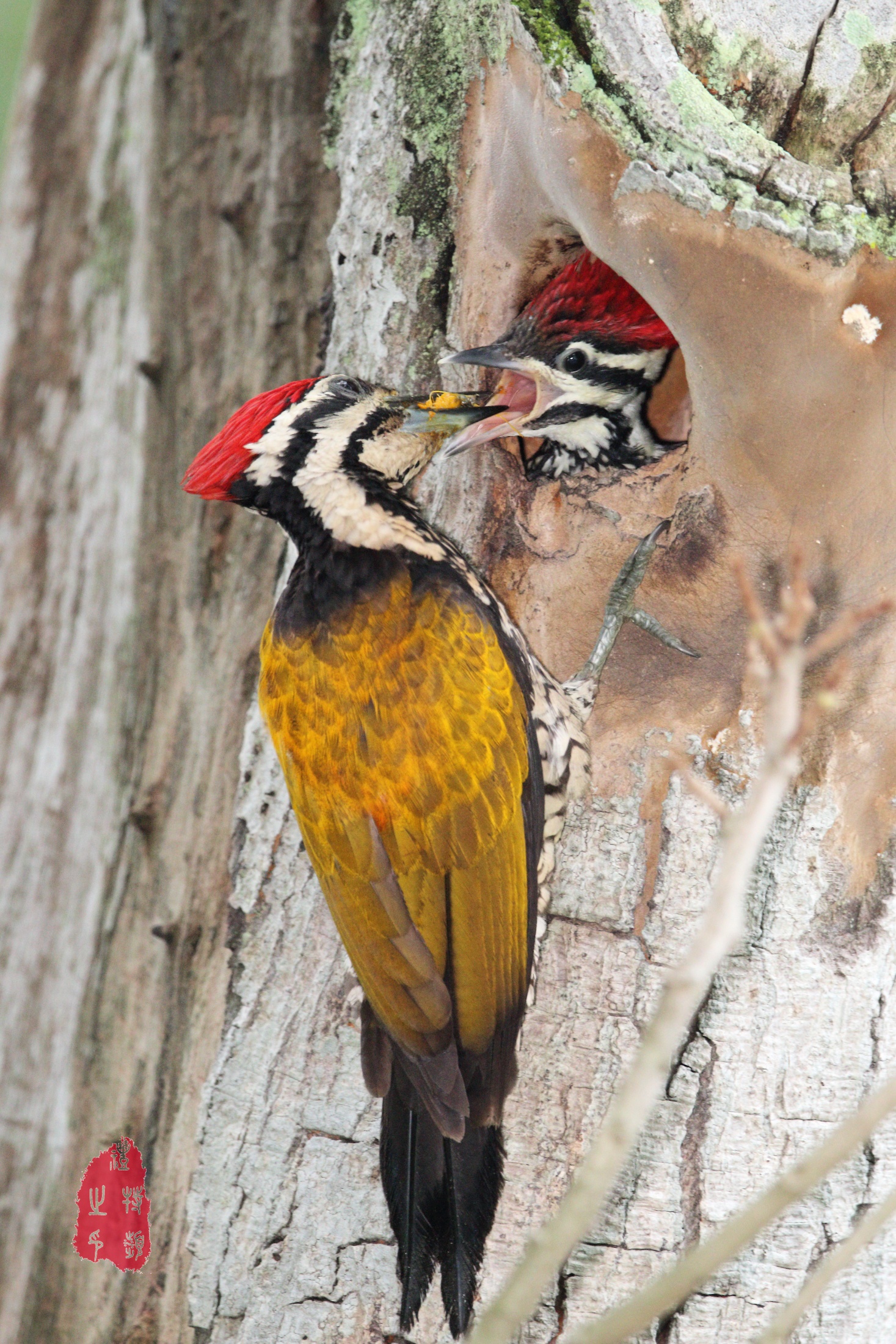
I explore and enjoy the world through light, shapes, and colors. Through my photos, I share my perceptions of nature and its beauty. Birds have a special way to capture my fancy when I'm out enjoying serenity during my leisure time.

Bionote

I was born and raised in Shanghai, China. I have been working as a research engineer for over 20 years in Singapore. As a self-taught photographer, I find joy in visual arts more than in scientific research.